Get Full Government Meeting Transcripts, Videos, & Alerts Forever!
Get email alerts on the Cannabis Regulation topic
No spam. Unsubscribe anytime.
Tucumcari commission debates cannabis consumption zones, grandfathering and licensing timeline
Summary
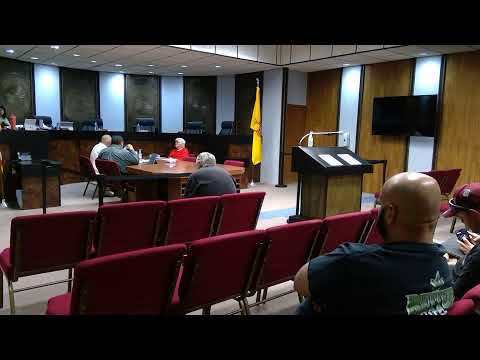
Tucumcari City Commission members on Oct. 9 discussed proposed changes to the city’s cannabis ordinance that would define designated cannabis consumption areas, limit growing to certain zones and set rules for manufacturing licenses and outdoor consumption.
Tucumcari City Commission members on Oct. 9 discussed proposed changes to the city’s cannabis ordinance that would define designated cannabis consumption areas, limit growing to certain zones and set rules for manufacturing licenses and outdoor consumption.
The matter matters to existing dispensaries, growers and applicants because commissioners debated whether to “grandfather” businesses already licensed in zones now restricted for growing, how to define consumption areas separate from retail sales, and how to time city licensing so businesses can apply to the state for higher-level manufacturing permits.
Commissioners and business speakers spent the meeting clarifying which zoning districts will allow cultivation and consumption. Under the draft language discussed at the meeting, growing would be allowed only in agricultural and industrial zones commonly referenced as C1/C2 in the draft language; commissioners asked staff to produce a zoning map to show the exact parcels affected. Commissioners and speakers also discussed creating a separate consumption zone overlay so consumption lounges and outdoor consumption areas would be explicitly mapped and not simply inferred from the state statute.
Multiple business owners urged the commission to protect investments already made in local facilities. One business speaker, Thomas Lucas, said his facility’s city license is required for a state application and that his state license “will expire late December, and the cities won't be for renewal till the January,” asking whether the city could allow an earlier city application or an extension so applicants can pursue a state Class 3 manufacturing license without losing current state standing.
Commissioners and attendees discussed a possible grandfathering clause that would leave currently issued local licenses valid at their existing locations but would not allow a licensee who vacates a site to transfer that entitlement to a new site in the restricted zone. Several speakers said that approach would protect businesses that have already invested in facilities while limiting future approvals in residential areas.
Speakers raised enforcement questions about private residential growing and outdoor consumption. The commission discussed using code compliance inspections and local licensing penalties to enforce the ordinance, but commissioners asked the city attorney and zoning staff for written legal advice about whether the city can create a new overlay zone or must adjust C1/C2 designations rather than perform “spot zoning.” Commissioners also requested a map showing where C1 and C2 currently lie so the body can see whether proposed consumption or cultivation allowances would extend into residential areas.
The draft language discussed would separate sales and consumption areas so that products on retail display would not be visible from consumption areas and access to consumption areas would be restricted after storefront ID checks. Speakers and staff discussed building requirements such as separate HVAC or filtration for indoor consumption lounges and restricting storefront display of product where consumption occurs in the same building.
The commission touched on extraction and manufacturing. Several manufacturers said they plan to use nonvolatile water-based extraction methods (rosin/heat/pressure) rather than volatile solvents; commissioners discussed whether the ordinance should distinguish those processes for permitting and insurance purposes. There was no technical change to state licensing law at the meeting; speakers said they need a city permit in place to apply to the state for a Class 3 manufacturing license.
On timing, staff outlined a procedural timeline: the commission was told the ordinance could be scheduled for first reading on Oct. 23, followed by the statutory notice and a public hearing at a subsequent meeting (staff mentioned a possible public hearing date in mid-November). Several business owners asked whether the city could provide application or renewal timing accommodations so local applicants seeking Class 3 status with the state would not be forced to downgrade to Class 2 while waiting for the city to adopt the local code changes.
No formal vote on ordinance text or grandfathering language occurred at the Oct. 9 meeting. Commissioners asked staff to bring zoning maps, the proposed amended ordinance language that separates sales and consumption, and a legal opinion on zoning-overlay options and the city’s authority to create a consumption-zone overlay. The commission indicated it would place the item on its next agenda for formal consideration.
Next steps: staff will return to the commission with maps and legal guidance; the ordinance was tentatively scheduled for first reading Oct. 23 with public notice and a subsequent public hearing to follow, pending publication and statutory notice requirements.