Get Full Government Meeting Transcripts, Videos, & Alerts Forever!
Get email alerts on the Zero Emission Buses topic
No spam. Unsubscribe anytime.
Committee members flag challenges with zero-emission buses and supply chain constraints
Summary
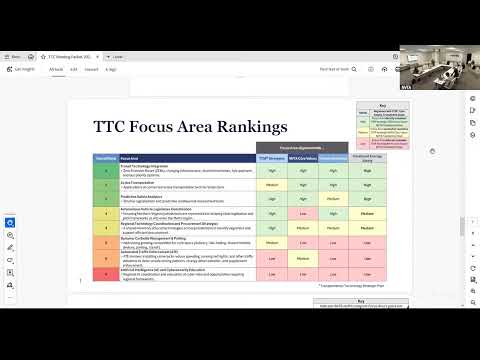
Participants described operational and supply challenges for zero-emission buses (ZEBs), including limited U.S. manufacturers, battery life and charging-infrastructure constraints; NVTC and local agencies are tracking alternatives such as hydrogen fuel cells.
Committee members described procurement, technical and operational challenges associated with battery-electric zero-emission buses and urged continued regional coordination.
Speakers said only a small number of U.S. manufacturers currently deliver Buy America-compliant battery-electric buses, which constrains procurement options and parts availability. "There are only two manufacturers functioning right now that can deliver a Buy America battery electric bus," one transit representative said, noting fleet reliability and parts challenges.
Panelists also discussed battery life cycles and midlife replacement: an FTA transit bus has a typical useful life of 12 years, and battery packs may require replacement in about six to eight years. Operators noted that commuter coach duty cycles (long-distance, higher-speed trips) reduce opportunities for regenerative braking and may require midday charging, which raises costs and infrastructure demands.
Regional agencies are tracking alternative zero-emission technologies, including hydrogen fuel-cell buses, and sensitivity to changes in federal Buy America policy that could affect whether foreign-made buses are eligible for purchase. "If you lift the Buy America requirement does that mean that the Chinese fleets enter the marketplace?" one participant observed.
Why it matters: NVTA funds and coordinates projects that can affect fleet purchases, depot charging and regional infrastructure; supply-chain and lifetime-performance issues influence long-term capital and operating costs.
Next steps: NVTC said it has released a regional zero-emission bus strategic plan and a shared en-route charging study, and agencies agreed to continue sharing technical findings. The committee did not adopt procurement policy changes but highlighted ZEBs as an ongoing coordination item for 2026.
Ending: Staff said NVTA will continue monitoring manufacturer performance, depot charging strategies and federal procurement policy developments and will report findings back to the committee as part of the 2026 work program.