Get Full Government Meeting Transcripts, Videos, & Alerts Forever!
Get email alerts on the Permit Notice Appeals topic
No spam. Unsubscribe anytime.
Columbia County commissioners press for clearer permit notices, appeals procedures and larger public-notice signs
Summary
During a workshop on the comprehensive-plan update, commissioners and staff discussed repeatedly missed appeals notices, the need to codify public-notice posting practices and a board-level review of signage standards to improve public awareness and reduce confusion about permit approvals.
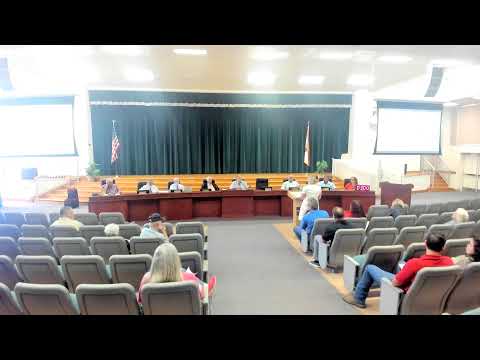
Columbia County commissioners, planning staff and members of the public spent a substantial portion of their workshop discussing how the county notifies residents about permit hearings, how appeals work and what public-notice signage should look like.
Planning staff and commissioners said notices are often not visible or understood by residents and proposed a mix of administrative changes and code updates to improve awareness and reduce the number of appeals filed because residents said they did not know about decisions.
Melissa, a planning staff member, told the commission that county planners had taken in about 3,700 building and permit applications so far in the fiscal year, which she cited to illustrate the volume of work and the need to streamline notice and appeal procedures.
Appeals and administrative remedies
Several speakers said the right to appeal land-use decisions is not well known to residents. Commissioners and staff agreed they will prepare standard meeting scripts so that, at the conclusion of any quasi-judicial hearing, the presiding officer will explain whether and how an appeal may be filed and the applicable deadline. One commissioner asked that the script include immediate on-record notice of appeal rights so residents are not later surprised they missed the window.
County legal guidance offered two practical points: appeals serve as an administrative remedy residents must exhaust before seeking judicial review, and an appeal can preserve a court challenge if a citizen believes a board or board of adjustment incorrectly applied the LDR checklist. Commissioners and staff also discussed fees for appeals, noting fees are intended to limit frivolous filings while preserving access to review.
Notices, sign size and content
The group discussed sign size, durability and content. Commissioners and staff described past use of inexpensive 8 1/2-by-11 public-notice sheets taped to plywood as difficult to read from the road and prone to removal; county sign-shop staff offered reusable metal signs with changeable face panels or stickers. Several participants supported substantially larger signs and suggested a 3-by-4 or 4-by-4-foot sign in a bright, highly visible color with a few bold keywords (for example, "Rezoning" or "Zoning Change"), a hearing date and a phone number.
Participants also discussed placing a QR code and a link to the county website on the sign so passersby can get full project details without stopping. Commissioners asked staff to propose a standard that balances statutory posting requirements with readable, durable signage that can be reused to reduce long-term costs.
Process options discussed
Commissioners and staff discussed structural changes such as combining the Planning and Zoning Board and the Board of Adjustments (the meeting noted the two bodies currently have the same membership) to reduce duplication and speed decisions. Board members also discussed whether certain permit types, for example borrow pits or heavy industrial uses such as asphalt or concrete plants, should be routed to the county commission for discretion rather than approved administratively at the board-of-adjustment level.
One planning staff suggestion to handle both the constraints of state law and local concerns was to require more "substantial competent evidence" for approvals of heavy industrial uses, increasing the evidentiary burden while keeping the review at the same board level. Staff said they will develop proposed notice and signage standards and bring them to the commission for policy direction.
Ending
Commissioners directed staff to draft meeting scripts, evaluate codifying a regular PIO posting schedule, standardize public-notice signs (size, color, core wording and a contact number) and prepare options for routing specific permit types to the commission or maintaining administrative review with a higher evidentiary standard. The county will present proposed changes in follow-up workshops.