Get Full Government Meeting Transcripts, Videos, & Alerts Forever!
Get email alerts on the Comprehensive Plan topic
No spam. Unsubscribe anytime.
Columbia County begins update of comprehensive plan and land development code; consultants report 176 survey responses
Summary
Consultants and county staff presented early findings from outreach on Columbia County's comprehensive plan and land development code review, reporting 176 survey responses and proposing organizational and policy changes while flagging the effects of Florida's Senate Bill 180 on potential new restrictions.
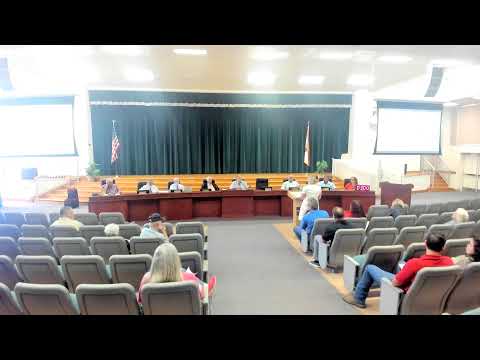
Columbia County officials and consultants on Wednesday opened a listening phase for a multi-month overhaul of the county's comprehensive plan and land development code, presenting public engagement results and a list of preliminary code changes that county leaders will review before formal recommendations are transmitted.
The project team from Kimley-Horn and North Florida professional services told commissioners the outreach produced 176 online survey responses and a series of stakeholder workshops, and that staff will return with specific recommendations in the coming months.
Consultant Blair Knighting of Kimley-Horn said the work is currently in a listening stage and that staff had distributed flyers, staffed booths at an Ichetucknee State Park outreach event and the July 4 celebration, and held workshops for developers and county staff. "We received 176 responses," Knighting said, adding that the team is compiling what residents and stakeholders said about housing, growth and the land-development rules.
Why it matters: Columbia County's comprehensive plan sets overarching goals and policies for growth, while the land development code implements those policies through rules on uses, setbacks, parking, signs and other site requirements. Changes to either document can affect where housing, commercial development and industrial uses are allowed and what standards they must meet.
Key findings and early proposals
- Public engagement and topics: The project team said survey and workshop responses stressed job opportunities, economic stability and concern about traffic, crime and a lack of youth activities. Respondents named a need for more affordable and multifamily housing options and said they want well-located job opportunities.
- Specific topics under review: Consultants reported mixed responses on whether the county should tighten sign and fencing regulations; a majority of respondents supported requiring tree protection for some new development, with oak trees flagged frequently. Respondents who answered supported open-space requirements for larger residential developments. The team said they will return with more detailed proposals after additional analysis.
- Organizational and drafting changes: The team proposed adding a definitions section to the comprehensive plan, reorganizing future land-use categories and moving parking and landscaping rules out of specific zoning tables into standalone LDR sections. Staff also recommended relocating minimum-housing standards from the LDR into the county's building-code or code-of-ordinances sections, which the team said is more consistent with practice in other jurisdictions.
- Technical reviews: Knighting said the consultant team is reviewing the county's AG-2 (agricultural) land-use category and comparing mapped parcels to on-the-ground conditions; the goal is to identify legacy splits or density mismatches that may need adjustment to reflect current uses.
State law risk: Senate Bill 180
The consultants flagged Florida's recently enacted Senate Bill 180 as a significant constraint on drafting more restrictive local land-use rules. "It is enacted. It is codified," Knighting said, explaining the law limits local governments from adopting land-use changes that are more restrictive or burdensome than current law and that the provision the consultants are watching remains in effect through 2026.
Knighting and staff noted litigation and uncertainty around how the state will interpret the statute: the team cited a recent court action in another county that led to a nullification of that county's comp plan changes. As a result, staff said they will track potential conflicts between proposed local changes and Senate Bill 180 and may recommend piecemeal transmittals or alternative drafting approaches if the law makes broad changes vulnerable to challenge.
Next steps
Staff said they will prepare a set of recommended changes and present those recommendations to commissioners in the coming months, likely in a series of workshops focused on major policy areas rather than line-by-line edits. The consultants emphasized they will align any proposed definitions and LDR changes with state law and will present implementation options that account for the Senate Bill 180 constraint.
The county's planning staff asked commissioners and members of the public to keep submitting comments; Knighting said the project team will return with formal recommendations after reviewing the input.
Ending
Staff indicated a schedule for follow-up briefings and workshops and asked commissioners to provide any immediate feedback by e-mail. The project remains in the public-engagement phase; formal ordinance or comp-plan transmittals will follow only after the consultant and county staff prepare draft language for the commissioners to consider.