
Costa Mesa council directs CEQA review for Fairview Developmental Center with 2,300–4,000 unit envelope, sets 14‑acre open‑space minimum
Get AI-powered insights, summaries, and transcripts
Subscribe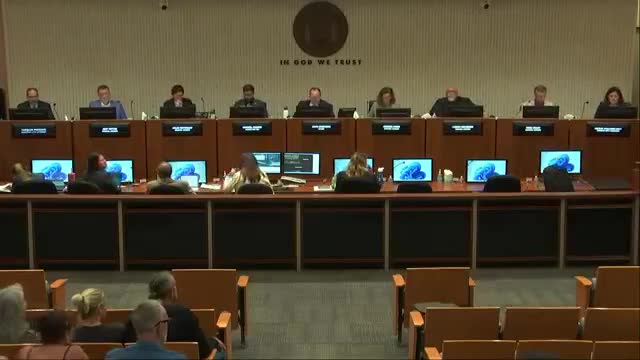
Summary
The Costa Mesa City Council voted Tuesday to start environmental review of the Fairview Developmental Center specific plan using an envelope that would study between 2,300 and 4,000 dwelling units, up to 35,000 square feet of commercial uses and a minimum of 14 acres of publicly accessible open space.
The Costa Mesa City Council on Tuesday voted to initiate environmental review for the Fairview Developmental Center (FDC) specific plan, directing staff to prepare a CEQA analysis that studies a minimum of 2,300 and a maximum of 4,000 dwelling units, up to 35,000 square feet of commercial uses and a minimum of 14 acres of publicly accessible open space.
The council’s vote follows a months‑long planning process led by city planning staff and PlaceWorks consultants and a string of public workshops. Planners told the council the envelope is intended to give the city sufficient information for environmental review while continuing work on the draft specific plan and design standards.
Planning Manager Anna McGill told the council the state’s statutory framework for reuse of the site, led by Senate Bill 188, requires coordination with state agencies and a broad plan document. Consultant Suzanne Schwab summarized the financial modeling used to test several land‑use concepts and told the council: “Concept number 1 is not feasible. Concept number 2 would be marginally feasible ... and concept 3 is financially feasible.” That analysis informed the range the council authorized staff to study.
Why this matters
The FDC site, a largely state‑owned campus west of Harbor Boulevard, is the largest remaining undeveloped parcel in Costa Mesa. How the city balances housing capacity, affordable units, open space and access will shape the city’s housing supply and local traffic patterns for decades. The council’s instruction starts the formal CEQA process but does not lock the city into a final unit count or design; the council and staff said they expect further refinement during the specific‑plan and entitlement stages.
What the council decided and what remains
The council motion—moved by Mayor Stevens and seconded—directed staff to: initiate a notice of preparation and CEQA analysis that studies a 2,300–4,000 dwelling unit envelope; include up to 35,000 square feet of commercial/mixed‑use space in the project description; study up to three points of access and analyze traffic and public‑safety impacts of those options; and include a minimum of 14 acres of publicly accessible open space as part of the specific‑plan policy discussion. The council explicitly excluded a separate harbor‑frontage study from the CEQA scope proposed tonight; councilmembers said such a study could be considered on a separate timeline.
Council and public concerns
Council discussion was wide‑ranging and prolonged. Members repeatedly emphasized two tensions: the community’s frequent requests for more parks and open space, and the developer‑driven financial feasibility that, according to consultants, may require higher densities to fund infrastructure, remediation and public amenities. Several council members said they wanted stronger assurances the golf course and adjacent recreational resources would not be reduced or degraded by any future road alignment. Councilmember Mike Beaulieu pressed staff on schedule and on how the city will reconcile the housing element targets with the state process. Councilmember Manuel Chavez urged the council to consider higher densities paired with more on‑site services and mixed use so the neighborhood is self‑contained and does not push trips onto Harbor Boulevard.
Public testimony reflected the same split. Housing advocates urged the council to maximize affordable units and density, framing FDC as the city’s best and perhaps only realistic opportunity to meet RHNA and the housing element. Neighbors and Fairview Park advocates urged caution, calling for substantial open space and protection of the Mesa Linda golf course and parkland.
Next steps and timeline
Staff said drafting of the specific plan is already underway; releasing the CEQA notice of preparation was the immediate next step after council direction. The city has a contract timeline with the state that was extended to December 2026; staff said that schedule will guide environmental review, plan drafting and follow‑up hearings. If a master developer is selected by the state, the city said it would expect the developer to comply with the adopted specific plan and to negotiate development agreements covering mitigation, phasing and public amenities.
Speakers
- Anna McGill, Planning Manager, City of Costa Mesa (staff) - Suzanne Schwab, PlaceWorks (consultant) - Melinda Dacey, Principal Planner (staff) - Steve Gunnels, Chief Economist (consultant) - Mayor Stevens (Council) - Council member Andrea Marr (District 3) - Council member Arliss Reynolds (District 5) - Council member Jeff Pettis (District 6) - Council member Mike Beaulieu (District 1) - Council member Lauren Gumeros (District 2) - Mayor Pro Tem Manuel Chavez (District 4)
Authorities cited
- Senate Bill 188 (state law establishing the FDC reuse framework) — referenced by staff - “State density bonus law” (California Government Code density bonus provisions) — referenced by staff and consultants - Costa Mesa General Plan open‑space policy (4.26 acres per 1,000 residents) — referenced by staff - City of Costa Mesa Housing Element (adopted allocation and targets) — referenced in staff briefing
Actions
- Kind: other (CEQA scope and direction) - motion: "Direct staff to initiate CEQA environmental review for the Fairview Developmental Center specific plan studying a minimum of 2,300 and maximum of 4,000 dwelling units, up to 35,000 square feet of commercial uses, minimum of 14 acres of publicly accessible open space, and study up to three access points; exclude a concomitant harbor‑frontage study from tonight's CEQA scope." - mover: Mayor Stevens - second: Mayor Pro Tem Manuel Chavez - vote_record: [{"member":"Mayor Stevens","vote":"yes"},{"member":"Andrea Marr","vote":"yes"},{"member":"Arliss Reynolds","vote":"yes"},{"member":"Jeff Pettis","vote":"yes"},{"member":"Mike Beaulieu","vote":"yes"},{"member":"Lauren Gumeros","vote":"yes"},{"member":"Manuel Chavez","vote":"yes"}] - tally: {"yes":7,"no":0,"abstain":0} - outcome: "approved" - notes: "Council instructed staff to release a Notice of Preparation and continue drafting the specific plan; harbor frontage study to be considered separately."
Discussion vs. decision
- Discussion points: housing density, financial feasibility, mix of housing types, open space acreage, secondary access alignment and impacts to Mesa Linda Golf Course and Fairview Park, timing and state disposition process. - Directions: staff to release CEQA Notice of Preparation and study the specified envelope; continue drafting specific plan documents and return with further refinements and policy language related to open space, circulation, and amenities. - Final decision: vote to initiate environmental review under the agreed envelope; no final entitlements were granted.
Clarifying details
- Unit envelope for CEQA: 2,300 (minimum) to 4,000 (maximum) dwelling units (to be studied in environmental review). - Commercial: up to 35,000 sq ft of commercial or mixed‑use; consultants advised this level was to support residents within the site. - Open space: council set a minimum of 14 acres of publicly accessible open space to be reflected in the specific plan drafting; staff will use the city general‑plan standard (4.26 acres per 1,000) as the policy target. - Timeline: contract with state extended to December 2026; staff will release Notice of Preparation and proceed with environmental review and plan drafting in the coming months.
Proper names
[{"name":"Fairview Developmental Center","type":"location"},{"name":"PlaceWorks","type":"organization"},{"name":"California Department of General Services","type":"agency"},{"name":"California Department of Developmental Services","type":"agency"},{"name":"Mesa Linda Golf Course","type":"facility"},{"name":"Fairview Park","type":"location"},{"name":"Costa Mesa","type":"location"}]
Topics
[{"name":"land_use","justification":"Primary subject: draft land use plan, unit counts, open space and circulation","scoring":{"topic_relevance":1.00,"depth_score":0.95,"opinionatedness":0.10,"controversy":0.75,"civic_salience":0.95,"impactfulness":0.95,"geo_relevance":1.00}},{"name":"housing_affordability","justification":"Discussion centered on affordable unit targets, density bonus and RHNA compliance","scoring":{"topic_relevance":0.92,"depth_score":0.85,"opinionatedness":0.15,"controversy":0.80,"civic_salience":0.95,"impactfulness":0.90,"geo_relevance":1.00}},{"name":"transportation","justification":"Council directed study of secondary access points and traffic impacts","scoring":{"topic_relevance":0.78,"depth_score":0.65,"opinionatedness":0.10,"controversy":0.60,"civic_salience":0.80,"impactfulness":0.75,"geo_relevance":1.00}}]
Provenance
{"transcript_segments":[{"block_id":"3852.68","local_start":0,"local_end":120,"evidence_excerpt":"This is the Fairview Developmental Center specific plan draft preferred land use plan review and recommendation presented by miss Daisy, principal planner, miss McGill, planning and sustainable development manager, and Ms. Gulley and Ms. Schwab from PlaceWorks.","tc_start":"00:01:01","tc_end":"00:03:08","reason_code":"topicintro"},{"block_id":"16619.0","local_start":0,"local_end":120,"evidence_excerpt":"Motion carries 7 0.","tc_start":"02:47:--","tc_end":"02:47:--","reason_code":"topicfinish"}]