Get Full Government Meeting Transcripts, Videos, & Alerts Forever!
Get email alerts on the Labor topic
No spam. Unsubscribe anytime.
Council approves three-year MOU with Cupertino Employees Association; negotiator outlines closed-session process
Summary
The City Council approved a three-year successor MOU with the Cupertino Employees Association (CEA) after staff and outside negotiator described the confidential closed-session bargaining process and comparable-market analysis used to shape the agreement.
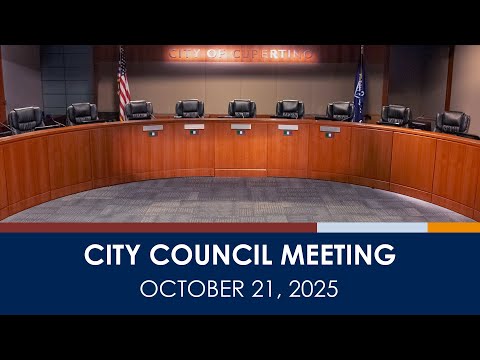
The Cupertino City Council voted unanimously Oct. 21 (with Council member Ray Wong absent) to approve a three-year successor memorandum of understanding with the Cupertino Employees Association (CEA), the city negotiator said, after staff outlined the closed-session bargaining process used to reach tentative agreement.
What the council approved: Council moved to "approve the recommended action" (agenda item 12) and the motion carried unanimously with Wong absent. The item covered adoption of a successor MOU for represented CEA employees; council also heard that the MOU terms are consistent with an earlier agreement reached this year with Operating Engineers Local 3 and that unrepresented employees generally follow the same pattern for parity.
How the agreement was negotiated: Christopher Boucher, an outside labor negotiator working for the city through Boucher Law, told the council the city follows a multi-month preparation process before bargaining. That preparation includes market and comparator research, a compensation philosophy (the city typically aims to pay near the market median), review of CPI trends, and modeling of the fiscal impact with the director of administrative services. Boucher said, "The city does have a very robust labor negotiations process," and explained that council gives direction in closed session to negotiators under state law.
Key terms discussed at the meeting: Staff described the negotiated package as primarily changes to base pay phased over a three-year period, a one-time non-pensionable lump-sum payment, and modifications to health-care provisions designed to keep pace with rising costs under a capped city contribution model. Staff said there were no changes to the holiday schedule in the agreement presented to council.
Public comment and council questions: Several speakers at the meeting urged fiscal caution and asked the council to explore other cost-control measures. One resident cited long-term increases in total compensation and healthcare costs and urged the council to consider exempting higher-level unrepresented positions from the same percentage increase as represented employees. Council members asked staff about how unrepresented positions are set and whether salary comparisons include those classifications.
Implementation and next steps: With council approval, the MOU will be finalized in the city's administrative files and staff will apply the agreed compensation adjustments in payroll according to the timetable in the MOU.
Ending: Council members discussed the trade-offs of competitive pay and fiscal discipline; the council approved the MOU and directed staff to provide related budget comparisons as requested by council members.