
Long Beach officials acknowledge rollout problems as new organics curbside program expands
Get AI-powered insights, summaries, and transcripts
Subscribe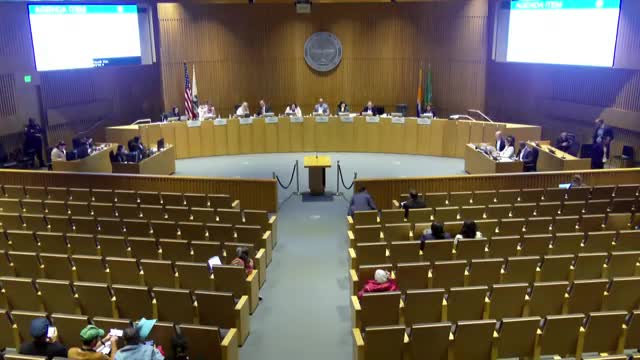
Summary
City staff told council the city has delivered green organics carts to all households but acknowledged missed pickups, call-center strain and staffing gaps; officials outlined hiring, new routing tech and public outreach to stabilize service.
Long Beach — City officials said Tuesday the citywide residential organics collection program is in place but still stabilizing after a phased rollout, acknowledging missed pickups, high call volume and staffing shortfalls while laying out near-term fixes.
City staff told the City Council the department has delivered green organics carts to all eligible households and that four rollout phases are complete. But the public works presentation showed a meaningful spike in missed collections and call-center demand after several rollout phases, with roughly 1,700 missed collections recorded in September — under 1% of the roughly 1.2 million monthly cart services, officials said — and about 10,000 unanswered or dropped calls logged during the busiest periods.
The city framed the program as a state-driven requirement (SB 1383) and said it had prepared by hiring operators, adding route‑planning software and by procuring replacement trucks. But staff and council members repeatedly emphasized the program has been a major operational lift and that residents whose pickup was missed experienced significant inconvenience.
City staff described multiple steps already underway to reduce missed pickups and phone wait times: recruiting and onboarding about 20 new refuse operators who received conditional job offers, adding 21 new refuse trucks that should arrive by year‑end, deploying five temporary mini-packer trucks to serve alleys and constrained areas, and doubling temporary call-center staffing in the short term. Staff also said they have rolled out in-vehicle turn‑by‑turn routing software and an asset-management system that tags and tracks each cart.
Staff urged residents to use the city’s online forms (linked from the city’s “Refuse 101” web page) to report missed service, request special pickups or request cart exchanges, saying that online reporting reduces peak phone volumes and helps dispatch teams prioritize missed routes the next day. Staff also said crews are prioritizing field investigations and door‑to‑door outreach, have distributed more than 3,700 indoor kitchen pails and will continue multilingual outreach in Khmer, Spanish and other languages.
Energy and Environmental Services Director Bob Dowell said the newly created department is prioritizing stability and change management and that the city will keep adapting route boundaries and vehicle assignments as organics use patterns change. ‘‘We will continue to stabilize routes and staffing over the coming months,’’ Dowell said.
Council members pressed staff for clearer communication to council offices and residents and asked for advance notice about neighborhood outreach and cart-exchange availability. Council members and staff also noted that some missed pickups are addressed the next day and urged residents to leave their carts at the curb through the established evening window so crews can collect them if they are delayed.
The council voted to receive the report and to continue monitoring implementation. Staff said they expect further operational improvements in October and into fiscal 2026 as newly hired staff clear onboarding and as additional trucks and carts arrive.
Why it matters: The city’s organics program responds to California requirements to reduce organic waste and methane emissions. The scale of the program — more than 118,000 accounts and roughly 1.2 million cart services per month — makes rapid deployment challenging; the city says staffing, routing technology and outreach are the highest priorities until service stabilizes.