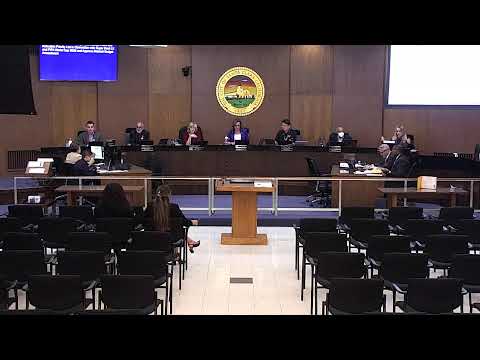
Council accepts 2025 water quality report showing contaminant detections below enforceable limits; public hearing held
Loading...
Summary
A required triennial public hearing on public health goals for drinking water concluded Oct. 21 with the council accepting the 2025 report. City testing found detections of arsenic, hexavalent chromium and perchlorate at levels above public‑health‑goal guidance but well below enforceable maximum contaminant levels; staff recommended no additional,
The Santa Clara City Council on Oct. 21 held a public hearing and accepted the city’s 2025 report on water quality relative to public health goals (PHGs), a state‑mandated informational review that must be presented every three years.
Summary of findings: Director of Water and Sewer Utilities John Ramirez told the council that three contaminants — arsenic, hexavalent chromium and perchlorate — were detected in the city’s water at levels above the California Office of Environmental Health Hazard Assessment public health goals, but well below the enforceable maximum contaminant levels (MCLs) set by state or federal regulators. Ramirez explained that public health goals are non‑enforceable advisory levels set by OEHHA and in some cases current laboratory detection limits are above those PHG values.
Key details: Ramirez explained the difference between a PHG and an MCL and that modern instrumentation cannot reliably detect arsenic and hexavalent chromium at OEHHA’s very low PHG thresholds. The city’s water testing showed arsenic ranging up to about 2.2 parts per billion (DLR and PHG are lower); the arsenic MCL is 10 parts per billion. Hexavalent chromium results ranged up to about 4.3 ppb, below the MCL of 10 ppb; perchlorate detections were up to 1.3 ppb against a 6 ppb MCL. Ramirez said detection of those constituents is typical in groundwater systems and that potential treatment methods (reverse osmosis, ion‑exchange and advanced filtration) are technically feasible but would generate secondary waste and significant disposal costs. Ramirez gave example cost ranges for treatment: arsenic removal was estimated at roughly $2.46–$9 per 1,000 gallons in a cited range, and hexavalent chromium treatment estimates could be materially higher, with sample ballpark figures noted in the presentation.
Council and public comment: Members asked about comparisons with neighboring systems and about the potential interactions between planned purified water projects and contaminant removal. Ramirez said groundwater typically shows these detections and that purified‑water treatment (reverse osmosis) would remove these compounds; he cautioned that large‑scale treatment plants also create toxic brine wastes that require expensive disposal. No members of the public asked for additional treatment; a resident commented that the public often underestimates the value of municipal water testing and expressed gratitude for safe water.
Council action: By unanimous vote, the council accepted the 2025 public health goal report and took no regulatory action; staff recommended continuing the current monitoring and reporting program and not installing treatment specifically to reach non‑enforceable PHG values because the city’s water is already below enforceable MCLs.
Ending: The council accepted the staff report and Ramirez said staff will continue monitoring and will provide updates if conditions or regulations change.