Get Full Government Meeting Transcripts, Videos, & Alerts Forever!
Get email alerts on the Built Environment topic
No spam. Unsubscribe anytime.
Council adopts 2025 California building standards with local amendments; narrows city reach code EV charging for retail
Summary
The City Council approved adoption of the 2025 California Building Standards Code (Title 24) with local amendments and carried forward select local Reach Code provisions. After debate, the council amended the staff proposal to reduce retail EV charging requirements and to exempt places of worship from higher local EV minimums.
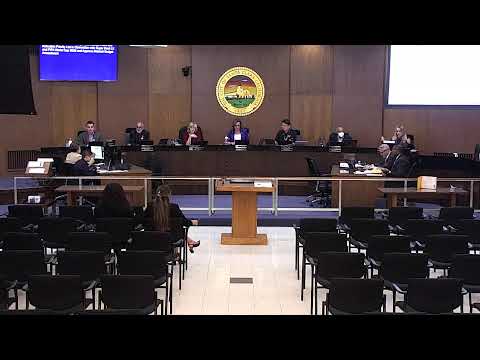
The Santa Clara City Council on Oct. 21 approved local adoption of the 2025 California Building Standards Code (Title 24) and a set of local amendments that carry forward the city’s Reach Code energy and green‑building standards where the council found local climatic and topographical justifications.
Staff framed the update as standard practice on the three‑year code cycle and recommended carrying forward several long‑standing local amendments, including: sprinkler and egress clarifications coordinated with the fire code; seismic reinforcement practices for concrete foundations; and Reach Code measures covering electric‑vehicle (EV) infrastructure and photovoltaic (PV) requirements.
A major point of council debate focused on proposed EV infrastructure minimums for nonresidential uses. Staff and the economic/sustainability team recommended a set of Reach Code thresholds for single‑family, multi‑family, office and retail uses. Council members asked for changes with an eye to feasibility for retail property owners and small businesses. Councilmember Jane (Jain) and others argued retail patrons often charge briefly and the higher 35% EV‑charging requirement proposed for some nonresidential categories could overburden new retail development; she proposed lowering retail requirements and increasing EV‑capable counts instead.
After in‑chamber discussion, Councilmember Hardy moved — and the council adopted — staff’s recommendations with an amendment that reduced the retail requirement to 15% Level‑2 EV charging stations plus 15% EV‑capable parking, and that carved places of worship (religious assembly) out from the higher local requirement and left them at the state (CalGreen) minimums. The motion passed 6–1.
On Reach Code photovoltaics (PV), staff noted the 2025 state codes are more aggressive on PV and that the city must adopt the state baseline; Santa Clara will retain locally higher minima for some multifamily and nonresidential categories where staff’s cost‑effectiveness analysis supported the city’s standard.
Council direction and next steps: staff will file the required documents for local adoption and submit Reach Code amendments and cost‑effectiveness testimony as required by the California Energy Commission. Councilmembers asked staff to return with clarifications on how the EV rules would be applied where utility capacity constraints exist and how the city might offer flexibility, such as automatic load management systems and exceptions if the utility cannot supply required power.
Ending: The council adopted the 2025 code package with locally tailored Reach Code provisions and a single, narrowly scoped EV amendment to reduce the retail charging burden and exempt places of worship to align them with state minimums.