
Davenport planning commission tables proposed solar zoning changes after detailed review, asks staff for revisions
Get AI-powered insights, summaries, and transcripts
Subscribe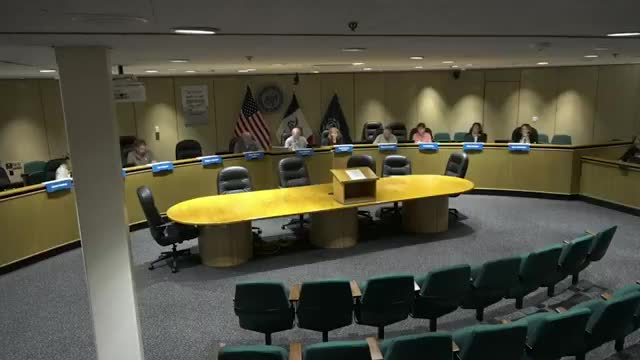
Summary
The Plan and Zone Commission for Davenport City on Tuesday discussed proposed amendments to Title 17 (ORD 25-02) that would add new definitions and rules for solar energy systems, battery energy storage and related accessory uses, then voted to table the proposal for one cycle so staff can address Council feedback and refine the ordinance.
The Plan and Zone Commission for Davenport City on Tuesday discussed proposed amendments to Title 17 (ORD 25-02) that would add new definitions and rules for solar energy systems, battery energy storage and related accessory uses, then voted to table the proposal for one cycle so staff can address Council feedback and refine the ordinance.
The commission’s discussion focused on several substantive elements of the draft: whether batteries should be separately regulated and where they can be sited, minimum setbacks and heights for community-scale and residential freestanding systems, decommissioning and maintenance requirements, and how much discretion the Zoning Board of Adjustment should have in imposing conditions.
Staff planner Matt Rue said the rewrite clarifies definitions and removes redundant language, and that the draft now treats "anti glare" language as "anti reflective" after checking permitting records. "We changed anti glare to anti reflective," Matt said, adding that the proposed code now explicitly includes battery energy storage system definitions and separates accessory rules for freestanding and building-mounted systems. Staff added decommissioning and maintenance requirements and removed a previous five-acre threshold for certain general regulations.
Key provisions discussed by the commission included:
- Floodplain exclusion: Principal-use solar energy systems would be prohibited within the FEMA-defined special flood hazard area (100-year/floodway), staff said. The code would adapt automatically to future flood-map changes.
- Size thresholds and use categories: "Community scale" systems are defined in the draft as occupying less than 10 acres; "utility scale" systems occupy more than 10 acres and are intended primarily for wholesale electricity.
- Height and setbacks: Community-scale and residential freestanding systems would be limited to a 10-foot maximum height. Freestanding residential systems would be limited to 50% of the building footprint or 720 square feet, whichever is greater; larger systems would be treated as community scale. Staff also proposed a minimum 10-foot setback from lot lines or the district standard, whichever is greater, and county/city-specific buffer rules for nonresidential use in residential districts.
- Battery storage restrictions and siting: The draft makes battery energy storage systems (BESS) a defined category and restricts BESS as accessories to community-scale solar; batteries would be accessory only to utility-scale systems and subject to additional standards. Staff cited proposed minimum setbacks of 200 feet from property lines and water conveyances for certain battery installations and a 500-foot setback from buildings in another section of the draft. Staff emphasized coordination with the fire marshal for technical permitting.
- Maintenance and decommissioning: The draft requires a site maintenance plan and an approved decommissioning plan that would address removal of arrays, structures, foundations, private roads and driveways and the site finish for drainage and ground cover. Equipment that is not repaired or replaced would trigger communications with the zoning administrator and a 12-month repair/replace timeline before decommissioning requirements are enforced, staff said.
Commissioners and staff also discussed screening and visibility, enforcement authority and liability concerns. Commissioners raised questions about whether smaller residential systems should require homeowner insurance (staff said the draft does not require homeowner insurance), how to secure long-term decommissioning when developers go bankrupt, and whether special-use review places too much discretionary authority in the Zoning Board of Adjustment. Commissioner Maness asked whether bankruptcy provisions could be added as a condition of special-use approval; staff said conditions could include bonds or insurance but that the city does not currently require bankruptcy-specific protections for other uses.
Several commissioners said the 10-foot panel height could create visibility conflicts with a 6-foot fence and asked staff to explore screening or different height allowances in residential neighborhoods. Commissioner Schilling and others also urged consistency with accessory-structure rules so solar installations are treated similarly to other backyard structures.
Staff said they had removed "agrivoltaics" as a separate use and instead would "encourage agriculture to be collocated with solar utility scale," noting the city’s existing code already allows multiple principal uses on a site. The draft also narrows districts where community-scale solar would be permitted as a principal use (removing downtown, certain manufactured-home and open-space districts and institutional campus areas unless a master plan triggers inclusion).
After the discussion the commission first voted to take the ordinance off the table for discussion and then, following additional comments and requests for clarification from Council members, moved to table ORD 25-02 for one cycle so staff can integrate Council feedback and prepare revised language. The motion to table passed on a roll call vote: Eichelberry—Yes; Hepner—Yes; Tallman—Yes; Manus—Yes; Garrington—Yes; Schilling—Yes; Thomas—Yes; Schneider—Yes. Commissioner Johnson was recorded as excused; Chairman Ingram declined to vote unless there were a tie.
Staff said the commission will hold a public hearing and another text-amendment discussion at its October 14 meeting (the next scheduled meeting) and will return with revised code language that addresses council concerns, decommissioning detail and additional technical coordination with the fire marshal and utilities.
Commissioners praised staff for the level of work and cross-department coordination and asked staff to research precedent language for protest provisions, containment/secondary-containment options for batteries, and toxic-material risks from damaged panels.
Votes at a glance: two formal motions were recorded during the item—(1) a procedural motion to take ORD 25-02 off the table for discussion (passed by voice), and (2) a motion to table ORD 25-02 for one cycle (passed by roll call; recorded yes votes listed above). No final ordinance adoption occurred; staff will return with revisions for further consideration.