Get Full Government Meeting Transcripts, Videos, & Alerts Forever!
Get email alerts on the Drainage Engineer Appointment topic
No spam. Unsubscribe anytime.
Warren County engineer seeks formal drainage engineer appointment and 20% pay increase tied to stormwater duties
Summary
County Engineer Kirk asked the commissioners to formally appoint him as county drainage engineer and approve an additional 20% of his engineer salary ($26,303) to cover duties required by MS4/NPDES stormwater obligations; commissioners asked staff to draft an agreement and said an offer will be made within 30 days.
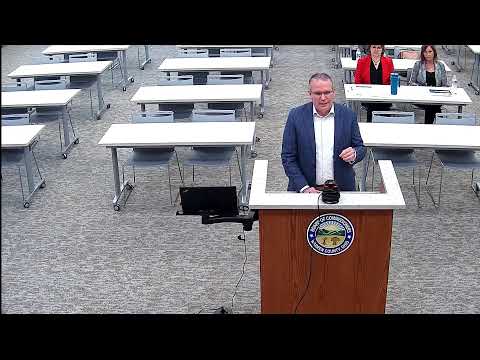
County Engineer Kirk told the Warren County Board of Commissioners he wants to be formally appointed county drainage engineer and paid additional compensation equal to 20% of his county engineer salary to cover required stormwater management duties.
Kirk said the duties stem from the county’s designation as an MS4 and the need to comply with the National Pollutant Discharge Elimination System (NPDES) Phase II requirements. He cited Ohio Revised Code provisions the county relies on for the drainage appointment and the county’s existing mechanism to fund stormwater work.
Kirk told commissioners he arrived at the 20% figure by comparing neighboring counties and by accounting for staff time spent on stormwater review and administration. He said the 20% figure would equate to $26,303 based on his current county engineer salary of $131,000; if approved, the additional pay would be charged to the county’s stormwater fund (Fund 5590), which Kirk said holds roughly $350,000–$400,000.
At the meeting Kirk described the current staffing and workload: two office engineers are spending an estimated 33% to 75% of their time on stormwater duties, Soil and Water handles several minimum control measures and receives roughly 60% of revenue generated by the $15 annual assessment that funds stormwater activities, and the county engineer’s office currently receives about 16% of that revenue to fund roughly half of one staff salary. Kirk said moving to the proposed compensation structure would increase the county engineer office’s share of the stormwater revenue to about 25% combined with existing allocations.
Commissioners asked whether the obligation to have a drainage engineer is mandatory; Kirk explained that counties designated as MS4s must meet EPA permit requirements and that the statutory appointment mechanism allows the board to appoint the county engineer or contract with an outside professional engineer. He acknowledged that his predecessor, Neil, had been appointed previously and that the question of compensation had been contentious in the past.
The board did not vote to appoint Kirk during the meeting. Commissioners asked legal counsel and staff to draft a written agreement that specifies the scope of services and compensation. Kirk and staff were told the board will prepare an offer and that, by statute, the appointee will have 30 days to accept or reject the appointment once the offer is made. County staff committed to prepare the agreement and present an offer within the next 30 days so Kirk can formally accept or decline.