Get Full Government Meeting Transcripts, Videos, & Alerts Forever!
Get email alerts on the Transportation topic
No spam. Unsubscribe anytime.
Downtowner data show midday and afternoon demand spikes; trustees weigh third van and coordination with RFTA
Summary
Downtowner presented ridership data showing demand spikes in afternoon hours and results from a two-day trial of a third vehicle; trustees discussed funding a limited service increase and planned coordination with Roaring Fork Transportation Authority (RFTA).
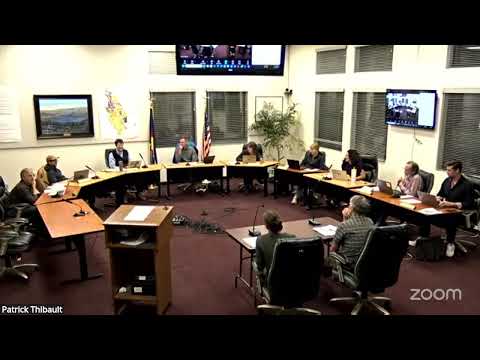
Trustees reviewed a 2026 service proposal and recent ridership data from Downtowner, the on‑demand microtransit operator serving Carbondale, and discussed whether to fund a third vehicle during afternoon and evening peak hours.
Downtowner cofounders Travis Gleason and Steve (last name not provided) and Colorado regional manager Mike Fisher presented year‑to‑date statistics and results from two trial days in September when a third van ran from about 11 a.m. to 7 p.m. Gleason said the service recorded 55,095 rides so far this year and that Carbondale Park & Ride accounted for roughly 18 percent of pickups (9,888 pickups, or about 18 percent of total rides).
Gleason described the two test days: “The first day that we tested was Monday, September 15...we got about a 24% increase in ridership compared to other Mondays in the month of September,” he said, adding that average wait times decreased by a similar percentage. On the Thursday test day the firm recorded a 16.5% increase in ridership and a 26.1% drop in average wait time, Gleason said.
Downtowner staff recommended placing a third vehicle on the road during peak hours to reduce wait times and capture unmet demand. Trustees and staff discussed an approximate additional annual cost for the extra driver hours of roughly $80,000 (Downtowner’s written proposal cited higher and lower figures depending on service hours). Several trustees favored a cautious, phased approach — for example funding extra service for part of 2026 — while staff recommended keeping the current two-van service in the draft budget and engaging early with RFTA on first‑and‑last‑mile coordination.
Trustees and Downtowner representatives discussed routing and prioritization strategies to increase connections to RFTA’s Park & Ride. Gleason said the operator can allocate one vehicle to prioritize routes that serve the park-and-ride to reduce wait times for those connections. Trustees also discussed fare options: Glenwood Springs recently set a $1 fare and trustees estimated a $1 fare in Carbondale, at current ridership volumes, could generate on the order of $60,000 annually (Downtowner and staff noted that any fare revenue would not fully offset operating costs).
Other operational data Downtowner provided included unique rider account totals (about 2,300 accounts), average vehicle occupancy (just over two passengers), and a distribution of wait times (about 55 percent of rides had waits of 0–10 minutes, roughly 30 percent 10–20 minutes and about 14 percent over 20 minutes). Downtowner and town staff said the operator will move the service to a regional app (RideFork) and can add demographic questions to the rider sign‑up flow if the trustees want that data for future planning.
Trustees asked staff to build budget options that could fund additional peak-hour hours for a partial year so the town can gather more operational data before making a longer-term commitment. Staff and Downtowner will also start early conversations with RFTA about cost-sharing and route alignment in the new year.
Ending
Staff will return with budget options that reflect limited-duration service expansion and the results of the planned RFTA discussions. Downtowner will continue to provide monthly ridership data to support those negotiations.