
Board asked finance committee to study hiring family-school collaboration specialists; five FTE previously funded but removed
Get AI-powered insights, summaries, and transcripts
Subscribe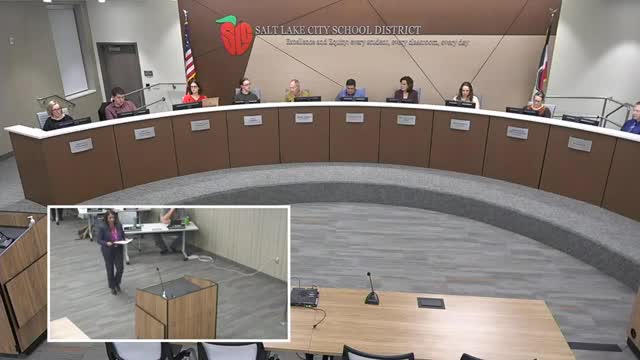
Summary
District staff outlined a family-school collaboration strategy and cost scenarios for reinstating specialist positions. The district said five FTE had previously been funded (about $410,000); trustees asked the finance committee to study options including scaling to title-1 schools or districtwide.
District staff presented a summary of family- and community-engagement strategies and requested board guidance on whether to restore dedicated family-school collaboration specialist positions. The item came during the Oct. 21 reports and discussion agenda.
Doctor Ruiz (presentation) summarized three priorities: deepen family engagement and learning partnerships, strengthen school-community partnerships and improve multilingual and multi-channel communications. The district said that in an earlier period five family-school collaboration specialist positions existed and the budgeted cost for those five FTEs was about $410,000.
Trustees also asked staff for cost estimates to expand the positions. Using current salary-and-benefits assumptions staff provided two scenarios: placing one specialist at each of the district's 22 elementary schools would cost an estimated $1.8 million annually; placing specialists at the district's 14 Title I elementary schools would cost an estimated $1.15 million. Staff said the previous five positions had been intended to rotate among schools, but that rotation had not occurred in practice.
Why it matters: Family engagement is tied to attendance, school culture and student outcomes. Board members asked for clarity on goals, metrics of success and whether to pilot different staffing models or shared positions before committing to a large-scale roll-out.
Board reaction and next steps: Trustees supported further study. Several members argued the finance committee should examine trade-offs and possible funding sources (district general fund, property-tax growth or reallocated savings) and produce recommendations. Trustees emphasized the need to define specific performance goals for any restored positions (for example, reducing chronic absenteeism, increasing family participation in SCC/PTA or increasing access to services) and to consider shared or part-time models that fit school needs.
Ending: The board directed the finance committee to study the proposal and return with options and fiscal trade-offs.