Get Full Government Meeting Transcripts, Videos, & Alerts Forever!
Eugene Council reviews options for Eugene–Springfield Fire governance; no decision made
Summary
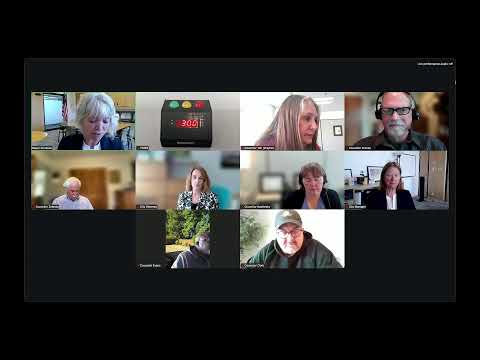
On Oct. 22, 2025, during a 90‑minute Eugene City Council work session, City Manager Sarah updated councilors on two main governance options for the Eugene–Springfield Fire & EMS system: forming a new fire district (modeled on the Willakenzie Rural Fire Protection District) or creating an intergovernmental entity (IGE).
On Oct. 22, 2025, during a 90‑minute Eugene City Council work session, City Manager Sarah updated councilors on two main governance options for the Eugene–Springfield Fire & EMS system: forming a new fire district (modeled on the Willakenzie Rural Fire Protection District) or creating an intergovernmental entity (IGE). Sarah told councilors, “you’re not gonna be asked to make a decision today,” and asked for feedback before she plans to make a recommendation in December.
Why it matters: the presentation framed governance choices around a single goal: a stable, efficient and scalable model that secures long‑term funding and improves staff capacity. Sarah cited persistent shortfalls — including an ambulance transport gap of roughly $1 million per year and the need for additional alternative‑response funding and stations — and said the system will need more resources regardless of governance path.
City Manager presentation and consultant work: Sarah said the city hired consultant AP Triton to evaluate five governance models and that AP Triton’s work emphasized that an IGE appeared most feasible. She focused her update on two options: (1) creating or annexing into a fire district and (2) forming an IGE. She emphasized her presentation was Eugene‑focused and did not present Springfield‑specific data.
Fire district (Willakenzie model): Sarah explained a new special district is a separate government with its own elected board and that, in Oregon, districts are typically funded primarily by property taxes. She used the Willakenzie Rural Fire Protection District rate of about $3.07 per $1,000 of real market value as an example. Under what she called a “maximum case” scenario —…
Already have an account? Log in
Subscribe to keep reading
Unlock the rest of this article — and every article on Citizen Portal.
- Unlimited articles
- AI-powered breakdowns of topics, speakers, decisions, and budgets
- Instant alerts when your location has a new meeting
- Follow topics and more locations
- 1,000 AI Insights / month, plus AI Chat