Get Full Government Meeting Transcripts, Videos, & Alerts Forever!
House subcommittee reviews MDOT FY2026 budget, outlines distribution from new road-funding package
Summary
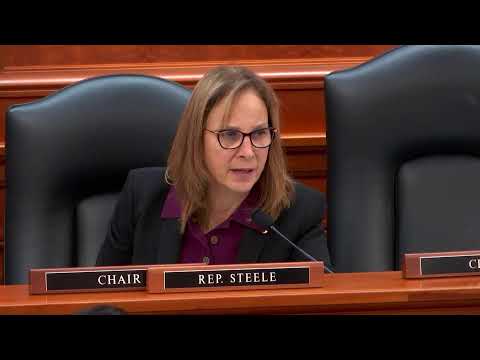
The Michigan House Appropriations Subcommittee on State and Local Transportation on Thursday heard a detailed presentation from the House Fiscal Agency on Michigan Department of Transportation’s enacted fiscal year 2026 budget and the road‑funding package that increases motor fuel taxes and creates a neighborhood road fund.
The Michigan House Appropriations Subcommittee on State and Local Transportation on Thursday heard a detailed presentation from the House Fiscal Agency on the Michigan Department of Transportation’s enacted fiscal year 2026 budget and the road‑funding package that underpins much of the increase.
Bill Hamilton, House Fiscal Agency, walked committee members through the enacted FY2026 appropriation figures and the provisions of the road‑funding bills tied to the transportation budget. “It began October 1,” Hamilton said of the FY2026 budget, and he emphasized that many line‑item amounts are estimates tied to recently passed revenue changes.
The presentation summarized the enacted budget using the FY2025 appropriation as a baseline. Hamilton said the FY2025 gross appropriation for transportation was about $6.8 billion and the enacted FY2026 gross appropriation is about $7.9 billion, a roughly $1.1 billion, or 15.9 percent, increase. He attributed the largest change to state restricted fund revenue tied to the newly enacted road‑funding package and noted the enacted budget includes roughly $2.3 billion of estimated federal aid and about $5.4 billion of state restricted funds for FY2026; the FY2026 enacted budget contains no state general fund general purpose appropriations for transportation.
Why it matters: the package shifts and increases transportation revenue available to the Michigan Department of Transportation, county road commissions, and cities and villages; it creates new dedicated funds and adjusts existing revenue flows, which will affect capital and operating programs statewide.
Key budget and program details
- Motor fuel tax and revenue estimates: House bill 4183, as presented to the committee, increases the motor fuel tax by 20 cents per gallon effective Jan. 1, 2026, with inflation adjustments thereafter. Hamilton summarized staff estimates that the motor fuel tax increase would generate about $1.073 billion in the first 12…
Already have an account? Log in
Subscribe to keep reading
Unlock the rest of this article — and every article on Citizen Portal.
- Unlimited articles
- AI-powered breakdowns of topics, speakers, decisions, and budgets
- Instant alerts when your location has a new meeting
- Follow topics and more locations
- 1,000 AI Insights / month, plus AI Chat