
House subcommittee reviews MDOT FY2026 budget, outlines distribution from new road-funding package
Get AI-powered insights, summaries, and transcripts
Subscribe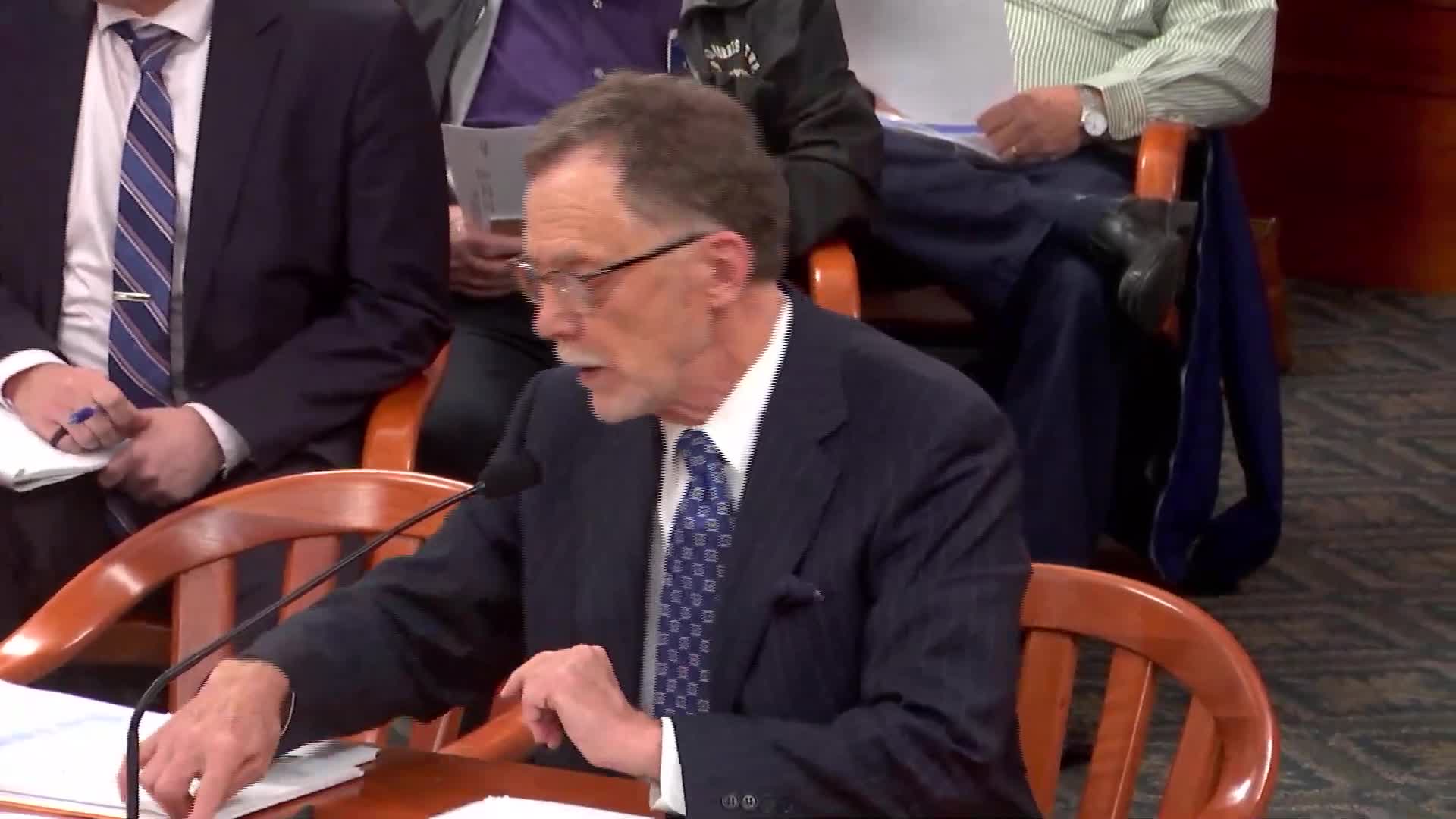
Summary
The Michigan House Appropriations Subcommittee on State and Local Transportation on Thursday heard a detailed presentation from the House Fiscal Agency on Michigan Department of Transportation’s enacted fiscal year 2026 budget and the road‑funding package that increases motor fuel taxes and creates a neighborhood road fund.
The Michigan House Appropriations Subcommittee on State and Local Transportation on Thursday heard a detailed presentation from the House Fiscal Agency on the Michigan Department of Transportation’s enacted fiscal year 2026 budget and the road‑funding package that underpins much of the increase.
Bill Hamilton, House Fiscal Agency, walked committee members through the enacted FY2026 appropriation figures and the provisions of the road‑funding bills tied to the transportation budget. “It began October 1,” Hamilton said of the FY2026 budget, and he emphasized that many line‑item amounts are estimates tied to recently passed revenue changes.
The presentation summarized the enacted budget using the FY2025 appropriation as a baseline. Hamilton said the FY2025 gross appropriation for transportation was about $6.8 billion and the enacted FY2026 gross appropriation is about $7.9 billion, a roughly $1.1 billion, or 15.9 percent, increase. He attributed the largest change to state restricted fund revenue tied to the newly enacted road‑funding package and noted the enacted budget includes roughly $2.3 billion of estimated federal aid and about $5.4 billion of state restricted funds for FY2026; the FY2026 enacted budget contains no state general fund general purpose appropriations for transportation.
Why it matters: the package shifts and increases transportation revenue available to the Michigan Department of Transportation, county road commissions, and cities and villages; it creates new dedicated funds and adjusts existing revenue flows, which will affect capital and operating programs statewide.
Key budget and program details
- Motor fuel tax and revenue estimates: House bill 4183, as presented to the committee, increases the motor fuel tax by 20 cents per gallon effective Jan. 1, 2026, with inflation adjustments thereafter. Hamilton summarized staff estimates that the motor fuel tax increase would generate about $1.073 billion in the first 12 months, including gasoline, diesel and alternative fuels; after a 2 percent recreation carve‑out, the amount available for transportation was shown as roughly $1.056 billion in the analysis.
- Additional revenue streams and totals: The package also converts an existing $600 million earmark of income tax revenue into a corporate income tax stream and includes estimated new wholesale marijuana tax revenue; Hamilton’s presentation used an illustrative conversion that combined those elements to produce a larger pool of road funding (transcript analysis shows a combined illustrative total in the presentation of roughly $1.105 billion under the bill‑set projections).
- Distribution formula changes and neighborhood road fund: Under current Act 51 distributions, Hamilton noted the internal formulas that allocate Michigan Transportation Fund (MTF) revenue to the state trunk line, county road commissions and cities and villages do not change once money reaches each bucket. The enacted road package creates a new neighborhood road fund and a different top‑level split for some of the new revenue in early years: the presentation showed a proposed distribution of 52 percent to county road commissions, 28 percent to cities and villages and 20 percent to the state trunk line fund for one component of the new fund. Hamilton also said his office estimated that, on average, affected local road agencies could see roughly a 33 percent increase in funds versus a 2024 baseline, although he cautioned estimates will be updated and local agencies should rely on MDOT’s model for precise allocations.
- Earmarks and targeted programs included in the package: Hamilton and the summary document identified several dedicated allocations in the new package: $100 million for local bridges, $40 million for a local rail grade separation fund targeted at high‑density safety projects, $100 million for public transportation programs, $35 million for the comprehensive transportation fund (CTF) in the bills as presented, and $65 million for a new infrastructure projects authority fund (a new program whose administration and rules Hamilton said remain to be clarified). Hamilton noted the budget itself included those items in one‑time and ongoing appropriations where specified.
- Other program and line‑item changes: Hamilton’s overview touched on increases in state trunk line maintenance and construction appropriations, changes in departmental reimbursements to other state agencies (for example Treasury’s motor fuel tax collection and Department of Environment, Great Lakes & Energy permit work), modest staffing and project adjustments for MDOT programs (including ongoing support and a road‑usage charge pilot study and associated position and one‑time funding), and shifts in transit capital and operating funds reflecting the mix of federal aid, CTF and prior one‑time COVID relief funds.
Questions and follow‑up
Committee members pressed for clarifications about the new infrastructure projects authority (which Hamilton described as “totally new” and said he would follow up on administration and program rules) and asked whether township matching requirements remain in place. Hamilton said the neighborhood road fund language in the bills, as he interpreted it, appears to provide greater latitude for county road commissions and local units to use the neighborhood road fund dollars for local projects without the matching restrictions that apply under section 12 of Act 51 for some MTF uses; he said MDOT’s guidance and further statutory interpretation would be important for counties and townships planning budgets.
Public comments from transit providers
The committee allowed brief public comment. Ken Jankowski, Huron Transit and president of Mass Trans, thanked lawmakers for additional transit funding and raised concerns about the sustainability and administration of the newly allocated transit dollars. A speaker identifying themselves with Michigan public transit associations said local transit providers were “extremely grateful” for the increases — Hamilton and committee members confirmed there is an amount shown in the bills for public transportation but that roughly $35 million shown in the bill set for the comprehensive transportation fund remained unallocated in the enacted appropriations and would need allocation decisions and administrative implementation.
Formal committee action
Representative Morgan moved to adopt the minutes of the Sept. 17 meeting; the motion prevailed by unanimous consent, with no objections recorded.
What’s next
Committee members and staff said they expect further briefings and follow‑up materials. Hamilton offered to provide members a multi‑year local distribution history for local bus operating and additional detail on the MDOT distribution model; MDOT’s monthly revenue estimates, he said, will provide updated allocations for counties, cities and villages. The committee will return to budget work as the next appropriations cycle begins.
Quotes from the hearing
"It began October 1," Bill Hamilton, House Fiscal Agency, said of the FY2026 budget during the presentation.
"Representative Morgan moves to adopt the minutes of the September 17 meeting," Representative Morgan said when advancing the procedural motion (motion adopted by unanimous consent).
"Mass Trans representing local transit providers are extremely grateful," a transit association representative said during public comment.
Less critical details or forward look
Hamilton repeatedly warned that many numbers in the document are estimates tied to newly enacted revenue changes and that MDOT’s and Treasury’s updated revenue models will drive final allocations at the local level. Committee members requested follow‑up on the administration and criteria for the new infrastructure projects authority fund and on how neighborhood road fund dollars will be treated for local matching and eligible work.