Get Full Government Meeting Transcripts, Videos, & Alerts Forever!
Get email alerts on the School Improvement topic
No spam. Unsubscribe anytime.
Allen Elementary outlines school improvement plan to boost literacy, math and attendance
Summary
Allen Elementary presented a School Improvement Plan that sets 6% year-over-year proficiency targets in literacy and math and a 10% reduction target for chronic absenteeism, with strategies including grade-level instruction, small-group interventions and professional development.
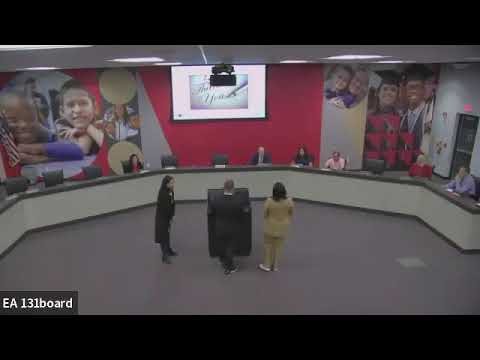
Walter Ronelas, principal of Allen Elementary School, presented the school's School Improvement Plan to the Aurora East USD 131 Curriculum Committee on Oct. 17, 2025, saying the plan targets literacy, numeracy and a stronger sense of belonging.
"The Allen vision is to cultivate a learning environment that supports each student through individualized responses, fostering a sense of belonging within a multicultural community shaped by the active involvement of all stakeholders," Ronelas told the committee.
Ronelas summarized the school's current academic snapshot, reporting MAP achievement at 19.71% overall and literacy MAP at 15.34%. He also cited assessment figures presented in the district packet: AR math proficiency of 4.62% and IR literacy at 10.4% (figures provided by the school presentation). Attendance was reported at about 93% at the time of the presentation.
The SIP sets measurable targets: "By the end of the school year, Allen Elementary will increase the percentage of students meeting and or exceeding grade level expectations by 6% across all reported groups as measured by the spring 2026 results in IR," Ronelas said. For attendance, the school aims to reduce chronic absenteeism by 10%.
Key strategies Ronelas described include continuing grade-level instruction for all students, using instructional coaches and interventionists to run professional development around new curriculum (HMH) and day-to-day use of i-Ready, and implementing small-group interventions formed from MAP and i-Ready data and common formative assessments. He said the school has partnered with the district language-acquisition team to support teachers working in a dual-language context.
On culture and belonging, Ronelas said Allen has implemented morning meetings and is collaborating with the school's PBIS coordinator to provide targeted professional development for teachers. He listed specific recognition practices such as postcards, certificates and office celebrations designed to reinforce positive behavior and increase student connection.
Responding to a committee question about differentiation, Ronelas said the school has begun using the district's new MAP dashboard and other district-provided dashboards "and really sit down with our interventionists and our coaches to kind of come up with those small groupings" and that when MAP data are not yet available the school will use CFAs to form need-based groups.
The presentation concluded with the Allen team noting ongoing monitoring and a focus on attendance, interventions and coaching cycles. No formal committee action or vote on the plan was recorded in the transcript.
Allen's SIP presentation was part of the committee's standing curriculum-review agenda and will be revisited through regular data monitoring and principal meetings.