
Nonprofit MiPOWER presents evidence and requests permission to bring certified therapy dog to Hobbs schools
Get AI-powered insights, summaries, and transcripts
Sign Up Free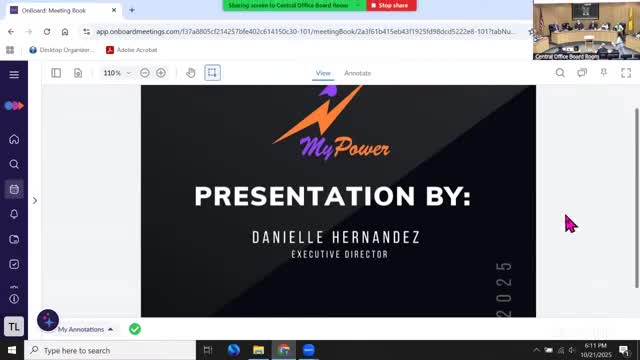
Summary
MiPOWER, a nonprofit offering teen-pregnancy prevention and mentoring programs, presented outcomes and asked the board for permission to bring a certified therapy/service dog, Remi; board said the item was informational and legal/health concerns remain.
A Hobbs-area nonprofit told the Hobbs Municipal Schools board on Oct. 21 that its MiPOWER program has worked with thousands of local students and asked for board guidance on allowing a certified therapy dog to visit schools.
Why it matters: MiPOWER presented program outcomes and requested permission to bring Remi, a Sheepadoodle the presenter said is certified as both a service and a therapy dog, into school settings for mentoring and specialized support. Board members said the item was a presentation only and advised caution because of legal and health considerations.
MiPOWER’s representative said the organization has operated in the district for roughly 15 years and reported serving 14,852 students since February 2010. The presenter described three core programs: mentoring circles for students entering middle school, an in-school program for sixth- through eighth-grade girls with about 1,100 registrants this year, and a leadership camp that served 159 students this year at C-TEC. The presenter said MiPOWER uses external evaluators and cited participant and caregiver survey responses describing positive social and behavioral outcomes.
The presenter claimed reductions in local teen birth rates, saying, “MiPower has lowered teen birth rates by 79% in that 15 to 17 year old category and 71 percent in that 15 to 19 year old category,” and framed that claim as the organization’s evaluation finding. The article reports the claim as presented; the board did not certify the evaluation data at the meeting.
The presenter then requested permission to bring Remi, described as a certified Sheepadoodle trained both as a service dog and as a therapy dog. The presenter described handler training and annual renewal requirements and said the dog can alert staff to medical events; the presenter also said the team completed about three months of training to permit limited human contact with the dog as a therapy animal.
Board members expressed support for the program’s mission but cautioned against giving approval during a presentation. The board’s legal adviser and staff were cited as having raised potential HIPAA and student-health privacy concerns and the possible need for further district discussion and policies. One board member said the item was “a maybe” and another said “it’s not a no” but that the presentation format was not the appropriate vehicle for formal approval.
No board action was taken; staff said the district would continue conversations with the nonprofit and with counsel to clarify health, privacy, and operational issues.
Ending: MiPOWER’s request to introduce Remi to schools will require further review of health/privacy protocols and formal district approval before the therapy dog may visit classrooms.