Get Full Government Meeting Transcripts, Videos, & Alerts Forever!
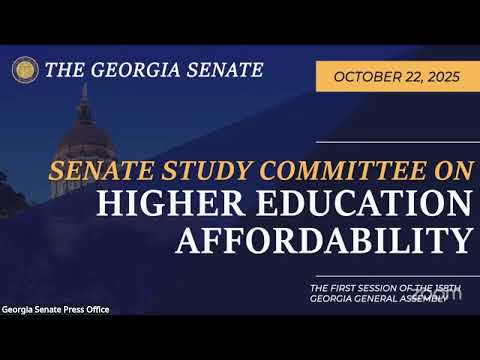
Counselors, financial-aid directors and students describe affordability shortfalls, housing and dual-enrollment uncertainty
Summary
School counselors, university financial-aid directors and students told the Senate committee that unmet need, housing costs, FAFSA barriers and possible changes to dual-enrollment funding are driving students to work more and borrow more.
Multiple speakers at the hearing described how unmet need beyond tuition — housing, food, books, transportation and fees — forces students to take on excessive work hours or loans.
Daphne Epps, school counselor at John Milledge Academy in Baldwin County, told senators that several families assumed the HOPE scholarship would cover all college costs. She provided billing examples from local students showing first-semester bills of more than $9,000 and said one family took out $13,000 in personal loans when unmet need unexpectedly surfaced.
David Saladin, a counselor at Baldwin High School, described local rural demographics and said many parents and students treat tuition, fees and ancillary costs as one combined bill. "Parents and students, they don't consider those things moving forward because they had the luxury of having this [technology and services] since middle school," Saladin said, arguing that students…
Already have an account? Log in
Subscribe to keep reading
Unlock the rest of this article — and every article on Citizen Portal.
- Unlimited articles
- AI-powered breakdowns of topics, speakers, decisions, and budgets
- Instant alerts when your location has a new meeting
- Follow topics and more locations
- 1,000 AI Insights / month, plus AI Chat