Get Full Government Meeting Transcripts, Videos, & Alerts Forever!
Get email alerts on the Elementary School Construction topic
No spam. Unsubscribe anytime.
Chariho committee selects single unified elementary option for Stage 2; hears statewide transportation pitch
Summary
The Chariho Regional School District School Committee voted to pursue a single unified elementary school in its Stage 2 application and heard a presentation from Ride on a multi‑phase statewide transportation plan that the vendor says could reduce local bus costs.
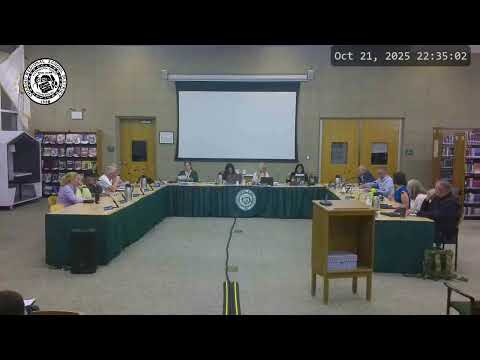
The Chariho Regional School District School Committee voted on Oct. 21 to advance a single unified elementary school option for its Stage 2 application to Ride, the state school-construction office, after several hours of presentation, public comment and committee discussion.
The vote puts the district on a path to a conceptual design and further community engagement ahead of any bond question to voters; district leaders stressed the choice tonight was to authorize Stage 2 work, not to lock in final design or budget.
Superintendent Gina (last name not specified) framed the decision in budget and safety terms, telling the committee that district elementary buildings are aging and that doing nothing necessitates continued, costly reactive repairs. The superintendent said the Stage 2 process is required to access state reimbursement and allowed the district to show an option that could be eligible for the state’s school-construction program.
SLAM, the district’s architecture consultant, presented three broad options to the committee and public: build one unified elementary; renovate or fully gut-and-renovate the existing three elementary schools; or construct three new elementary schools. The presentation included example planning figures and reimbursement scenarios the district said are preliminary and would be refined in Stage 2.
Mario Carreno, identified in the meeting as chief operations officer from Ride, gave a separate, earlier presentation on transportation that the committee heard before taking up the Stage 2 vote. Carreno said Rhode Island has a fragmented system of many local providers and statewide routes and argued there is excess capacity on some state-run routes. “If we can pick up other high school students, you might be able to shed multiple buses here,” Carreno said, adding that “every bus you shave is about a $100,000 a year in revenue that you get to keep.” He described three phases — data sharing on current routes, an optional independent route review, and longer-term cooperative bidding — and said pilot projects in other districts have produced savings.
Committee members and members of the public discussed trade-offs. Supporters said a single unified school can create operational efficiencies, more modern learning spaces and consistent services across the three towns. Several school committee members said a unified facility would avoid displacing students into temporary “swing” space during construction and could allow the district to return fifth grade to elementary schools. “If we are able to achieve operational efficiencies … those operational efficiencies, those savings go down to pay down the debt sooner,” one committee member said.
Opponents and some speakers raised concerns about cost, tax impact and school size. Public commenters and some committee members cited research favoring small schools, questioned long bus rides for young children, and asked for clearer cost-per-square-foot estimates and how land acquisition would be handled. “Is a less than $374 a year — $31 a month — tax increase worth it to provide our students with safe, up-to-date schools that would last the next 50 years? My answer is a resounding yes,” Hopkinton councilwoman Sharon Davis said when she presented a townlevel cost estimate for Hopkinton residents. Other residents urged a fourth option: smaller-scale renovations that would not trigger replacement/“as new” rules.
Several parents raised a separate but related policy issue during public comment: whether school social-media and photography protocols should be opt-in rather than opt-out. A parent said the district’s default was effectively “yes” for permission to post student images and asked the committee to consider changing to an opt-in standard; the superintendent said the district will review Richmond’s Instagram and discuss whether the committee wants to consider an opt-in policy.
After discussion of benefits, risks and timing, the committee voted to authorize a Stage 2 application for the single unified elementary school option. The Stage 2 step will develop conceptual designs, refine cost estimates, and provide the detailed information needed for subsequent decisions, including whether to advance a bond question to voters.
During the same meeting the committee also heard that stage-of-project timing is constrained by deadlines and by the practical steps needed to secure reimbursement; district staff advised the community that any bond question aimed at a November ballot would require coordination with town clerks and state procedures.
The superintendent and the consultant emphasized that the figures presented during Stage 2 are planning estimates and would be refined before any final commitment. “These contingencies are built into the planning process,” the superintendent said when discussing cost escalation and inflation assumptions.
What’s next: The committee’s Stage 2 authorization starts a months‑long design, outreach and review process. The district will refine cost estimates, continue community engagement, and return to the committee with detailed visuals and cost comparisons of the chosen concept before any vote to go to bond.
The committee also heard Ride’s presentation on student transportation and asked staff to share and review their local routing data with Ride’s vendor; any decision to move routes onto statewide buses would be optional for the district and would require follow-up discussion about logistics and liability.
A vote by the committee on the Stage 2 authorization passed by roll call on Oct. 21. The committee will reconvene for continuing Stage 2 work and community meetings in the coming months.
“Community engagement doesn’t end,” the superintendent said. “We will then be back out for community input on the option the school committee has selected with clear visuals, cost comparisons and a lot of the information some members here are looking for.”