Get Full Government Meeting Transcripts, Videos, & Alerts Forever!
Get email alerts on the Infrastructure Fairgrounds topic
No spam. Unsubscribe anytime.
Valley County receives update on fairgrounds master plan; survey shows 232 responses
Summary
Clearwater Financial updated the Valley County Board of Commissioners on progress developing a master plan for the Cascade fairgrounds, reporting 232 survey responses, 17 stakeholder interviews and work on site scenarios and cost estimates ahead of a recommended preferred plan in early 2026.
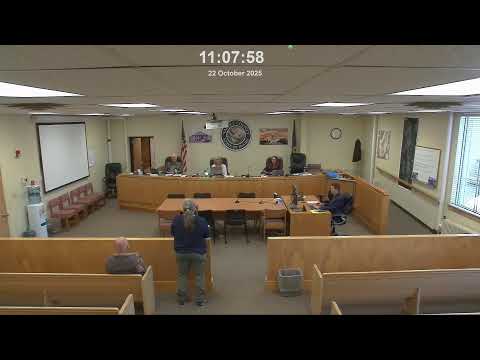
Clearwater Financial updated the Valley County Board of Commissioners on Wednesday, Oct. 22, about progress on a master plan to expand and reconfigure the Cascade fairgrounds to better serve the county year-round.
The presentation outlined a project timeline that began in May, work now between analysis and testing phases, a public survey launched June 20 with 232 responses so far, and 17 stakeholder interviews completed or nearly complete. Abby Urquiaga, municipal adviser with Clearwater Financial and project lead, said the firm is preparing a stakeholder summary, conceptual site scenarios and preliminary cost estimates to present a recommended scenario for the county in early 2026.
The update matters because the fairgrounds sit at a central location in Cascade and are envisioned to serve residents countywide, including from Donnelly and McCall. The project ties to Valley County’s previous facility planning: the fairgrounds were identified in the county’s 2023 master facility plan and remained a top priority in the 2024 and 2025 updates.
Clearwater’s work so far has included creating a steering committee composed of county staff, the fair board, the City of Cascade, University of Idaho Extension (4-H), and local construction interests, said Urquiaga. The committee has met biweekly, helped recruit stakeholders for interviews and coordinated outreach. “We kick[ed] this off in May,” she said, and the team is now compiling survey and interview themes to inform scenario development and cost estimates.
Cameron Bridal, a Clearwater team member, said the project has reached the stage where the team will move from preliminary analysis to the “meaty” conversations about tradeoffs and options. “This middle ground of the process is really where we start to put meat on the bone,” Bridal said.
A project web page, social posts, and a short video compiled from site visits will be posted as public engagement tools, the consultants said. Urquiaga said the survey remains live for the life of the project and that the team may present additional survey results to the commissioners if response volume increases significantly.
Survey and interview themes presented by Clearwater included: infrastructure and utility upgrades, a multipurpose indoor event facility, improved coordination among user groups, and opportunities for new revenue (for example, event rentals and RV hookups). Respondents so far rate the facility about 7.4 out of 10 on average; common concerns lowering scores were parking, shade, ADA access and restrooms, the consultants said.
Amanda Swales, the site designer on the team, described a priority technical issue: creating a second access point for loading and emergency access. Swales said options include building a limited-use access across the railroad right-of-way or creating a route off the highway, but both options face technical obstacles such as steep grades, large boulders and coordination with the railroad and the Idaho Transportation Department. “One of the first things that has come up and what is definitely needed is that second access point,” Swales said, noting the preferred location would be on the south side of the site to avoid creating new bottlenecks.
County staff noted two property changes that affect site planning: the county anticipates relocating the roads and bridge department from the fairgrounds site in 2026, which would free up space for reconfiguration, and the county recently acquired the Amerititle Building, now called the Cascade Annex, which could expand the fairgrounds footprint and access options.
Clearwater outlined the remainder of the project schedule: prepare a stakeholder interview summary and survey summary (presentation anticipated before the end of the year), use those findings to inform conceptual site scenarios and preliminary cost estimates (targeted for January 2026), complete an economic and demographic impact review, and then present refined recommendations and funding/implementation guidance. The consultants said final recommendations and phasing guidance would follow those steps and would include preliminary cost estimates.
Commissioners, steering committee members and consultants discussed next steps for outreach, including asking commissioners to share the survey widely to increase geographic representation. Urquiaga said the current survey responses are skewed about 50% from Cascade but noted the steering committee purposely sought representation from Donnelly and McCall. “We have several from Donnelly, several from McCall,” a steering committee member said.
The consultants also told the commission they had submitted an update to their retainer agreement and that the county requested the retainer item be placed on a future agenda for a separate discussion. Cameron Bridal said Clearwater would present additional updates at the next commission meeting and a fuller scenario package in January.
Funding sources and exact cost estimates were not provided at Wednesday’s presentation. Urquiaga said preliminary cost estimates will be included with the scenario recommendations, and the team will present funding and implementation guidance once the county selects a preferred scenario.
The consultants asked whether the commission had questions about survey responses, stakeholder representation or next presentation dates; commissioners asked for a fuller survey summary and for the consultants to return with scenario options and cost information.
Clearwater indicated it expects to complete major project deliverables by the end of 2026, subject to refinement and county direction as the process moves to scenario testing and recommendation.