
Council rejects municipal-modernization ordinance after heated debate over finance overhaul and appointed treasurer
Get AI-powered insights, summaries, and transcripts
Subscribe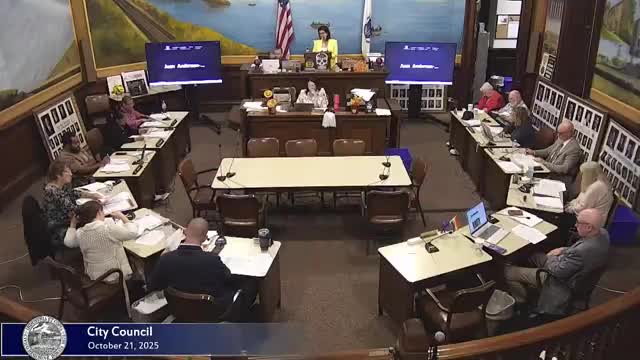
Summary
A package of municipal-modernization reforms — including a proposed chief administrative and financial officer (CAFO) and structural finance changes — failed when the council could not secure the supermajority needed for adoption. Several related charter changes passed or failed in separate votes during the same meeting.
The Holyoke City Council voted down a substitute municipal-modernization ordinance Tuesday after extended debate over how to fix longstanding problems in city finance operations and who should run them.
The contested ordinance would have created a new chief administrative and financial officer (CAFO) role and restructured several finance functions. The council failed to adopt the ordinance under the two‑reading rules required for appropriation or ordinance adoption; the motion that the ordinance passage be ordained failed 8–5 on a roll-call vote when a nine‑vote threshold was required.
Why it matters: City officials and outside advisers told the council that the municipal finance office has repeatedly received critical letters from the state Division of Local Services (DLS) about unreconciled ledgers and weak internal controls. Advocates for a structural change argued a CAFO and consolidated finance department would centralize accountability and modernize controls. Opponents argued the city should first recruit a highly qualified treasurer and allow that office to lead changes.
Key votes and motions - Municipal-modernization substitute ordinance (Item 25): Motion that the passage be ordained — failed, 8 yeas, 5 nays (required 9 votes). The clerk recorded the roll call; the motion did not meet the supermajority threshold required for final ordinance passage.
- Charter changes and related orders (votes taken separately): - Item 6 (Charter Sec. 39, city solicitor duties amended to allow council to set solicitor duties by ordinance): failed, 7 yeas, 6 nays (charter change required 9 votes to pass). - Item 7 (Amend charter to make Fire Commission and DPW commission appointments by mayor subject to council confirmation): approved, 12 yeas, 1 nay. - Item 8 (Amend charter Sec. 14 re: council members holding municipal employment): did not pass, 8 yeas, 5 nays (needed 9). - Item 9 (Clarify Section 22 reading/voting procedure for appropriations over $200): approved unanimously after a committee amendment. - Item 10 (Charter Sec. 24, mayoral approval/reconsideration language): failed, 8 yeas, 5 nays. - Item 11 (Delete Section 41 — city almoner no longer in charter): approved unanimously. - Item 12 (Section 49, transfers of appropriations — require two-thirds all members year-round): approved, 12 yeas, 1 nay. - Item 13 (Section 53, loans, bonds and notes — two-thirds of all members): approved, 12 yeas, 1 nay.
What councilors said - Councilor McGrath Smith (chair, Charter & Rules): “Rules only work and function if they’re clear... This is why we spelled out procedures in Section 22.” - Councilor Jourdain (Charter & Rules): “This just makes it crystal clear that first reading also requires a vote.” - Councilor Jardine (opponent of some solicitor changes): said he would vote no on the solicitor amendment because he wanted to preserve a degree of independence for the law department enshrined in the charter. - Councilor Rivera (supporter of broader modernization): described the problem as structural and argued that a single hired treasurer alone would not fix longstanding reconciliation and internal-control problems.
Debate highlights and clarifying details - State oversight and technical assistance: Councilors repeatedly referenced DLS letters dating to 2007, 2015, 2020 and 2023 that raised concerns about unreconciled ledgers and weak internal controls. - Contracted consultant and costs: The mayor’s office and council heard about contracting a consultant (referred to in discussion as TJ Plant or an equivalent) to provide short-term technical assistance. A cited consulting budget item mentioned approximately $137,000 for consultant services (discussion reference). Councilors also discussed market salary ranges: CAFO/CFO salary range referenced in committee testimony as roughly $150,000–$200,000; a highly qualified appointed treasurer’s market range was given as about $120,000–$150,000. - Timing and process: Several councilors urged prompt appointment of a qualified treasurer (the public approved an appointed-treasurer model in January) and recommended pairing that appointment with outside reconciliation work (state or outside auditors) and consultant assistance.
Outcomes and next steps - The municipal-modernization ordinance (Item 25) failed to reach the threshold for adoption. Several charter amendments in the package passed separately; others failed or were tabled. Councillors said they will continue work in committee and with the mayor and state DLS on reconciliation, outside audits, and recruitment of experienced finance staff.
Votes at a glance (selected items from meeting record) - Item 6 — Charter Sec. 39 amendment (city solicitor duties moved from charter to ordinance): failed 7–6 (needed 9 to amend charter). - Item 7 — Appointments to Fire and DPW commissions by mayor with council confirmation: passed 12–1. - Item 8 — Charter Sec. 14 change (employee/council service restriction): failed 8–5 (needed 9). - Item 9 — Section 22 clarifying first/second reading voting rules for appropriations: passed unanimously (amended to remove cross-reference to Section 13). - Item 10 — Section 24 (mayoral approval/veto language): failed 8–5 (needed 9). - Item 11 — Delete Section 41 (city almoner): passed unanimously. - Item 12 — Section 49 (transfers & two-thirds requirement year-round): passed 12–1. - Item 13 — Section 53 (loans, bonds and notes two-thirds requirement): passed 12–1. - Item 25 — Municipal-modernization substitute ordinance (passage ordained): failed 8–5; required 9 votes to adopt as an ordinance.
Why there was no single outcome: The overall package contained various, sometimes conflicting reforms. Some councilors supported structural change to centralize finance authority; others argued to implement incremental reforms beginning with a qualified treasurer and outside reconciliations. The council advanced some charter amendments while rejecting others and declined to adopt the full municipal-modernization ordinance at this meeting.
Ending: Councilors and staff agreed to continue the discussion in committee and through joint meetings with the mayor, the city auditor and state DLS, and some members urged swift hiring of qualified finance leadership while others sought structural safeguards before creating new executive roles.