
Animal welfare board urges standards for traveling animal acts; council directs staff to draft ordinance
Get AI-powered insights, summaries, and transcripts
Subscribe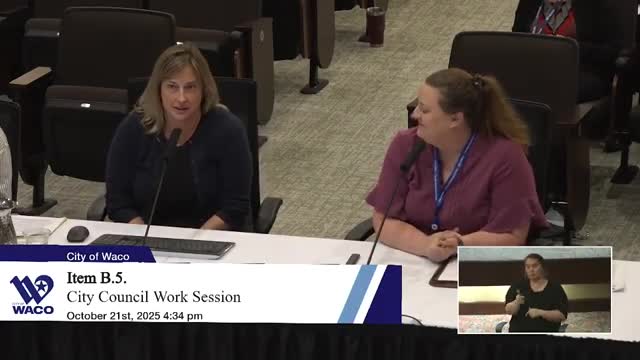
Summary
The Animal Welfare Board presented research and recommended a broader ordinance restricting traveling exhibits of wild captive animals, including bans on tools that cause injury and a requirement for a licensed veterinarian on site; council directed staff to draft a proposed ordinance for future readings.
The Waco Animal Welfare Board presented a year‑long review of traveling animal acts and recommended the city adopt a local ordinance setting standards for traveling exhibits of wild captive animals; council asked staff to prepare a proposed ordinance for formal consideration.
Animal Services Director Melissa Sheldon and Animal Welfare Board members Dr. Michelle Nemec and Cheryl Foster briefed council after the board investigated local and Texas precedent following an elephant exhibit that drew public concern in November 2024. The board’s focus group reviewed federal, state and municipal ordinances, talked with stakeholders including Cameron Park Zoo and Extraco Events Center representatives, and examined USDA inspection histories and public safety considerations.
The board presented two draft approaches: one applies a set of standards to a broad category of traveling wild animals (the board’s preferred approach) and a narrower draft focused only on elephants. The broader draft, which the board favored unanimously, would prohibit use of devices or practices that cause unnecessary physical injury or suffering and would require a licensed veterinarian to be in attendance for displays of the covered animals. The board emphasized the intent was not to affect permanent exhibits such as zoos, rodeos, or non‑mobile livestock events.
Council members said they supported improving local regulation. Mayor Jim Holmes and several council members expressed concerns about state preemption and noted staff paused further work while the Texas Legislature considered related bills this year; staff told council that no conflicting state law passed and that cities retained authority to adopt local rules in this area. Council directed staff to draft an ordinance along the lines of the board’s preferred, broader option and return for formal readings.
Next steps: staff will draft the ordinance, return for formal council readings and include enforcement language; staff noted the proposed approach is intended to be reactive (enforcement upon complaints) rather than a proactive permit regime, minimizing staff workload while enabling local enforcement against bad actors.