Get Full Government Meeting Transcripts, Videos, & Alerts Forever!
Get email alerts on the Ethics topic
No spam. Unsubscribe anytime.
McHenry County committee advances rewrite of county ethics ordinance, keeps $500 annual meal cap and recommends five‑year commissioner terms
Summary
The Administrative Services Committee reviewed a multi‑year rewrite of the county ethics ordinance, debated limits on gifts and meals, and directed staff to draft an ordinance that keeps a proposed $500-per-year meal cap and moves ethics commissioner terms from three to five years with staggered transitions.
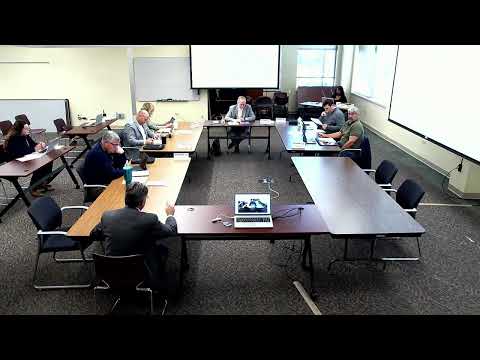
McHenry County’s Administrative Services Committee on Oct. 8 reviewed a near‑final overhaul of the county ethics ordinance and directed staff to draft the ordinance with several of the ethics commission’s recommendations, including keeping a $500 annual cap on gifts tied to food and extending ethics commissioner terms from three years to five.
The discussion — led by Scott Hartman, deputy county administrator, and Shelly Spada, chair of the county Ethics Commission — focused on aligning county language with state law, clarifying prohibited sources, tightening travel and meal exemptions, and adding procedural tools for the commission such as a vice‑chair position and a sua sponte dismissal power for clearly non‑jurisdictional complaints.
Why it matters: Committee members said changes will clarify county rules for employees and elected officials, reduce the risk that the ethics ordinance is “weaponized” with frivolous complaints, and help the commission maintain institutional knowledge through longer, staggered terms.
Hartman told the committee the commission has “undertook a complete overhaul of the ethics ordinance, really looking at how the language is written, how they would interpret certain provisions, some areas that really, be seen as gaps within the ordinance.” Spada described changes made to align the county’s prohibited‑source definition with the state statute and to add more specificity on travel and hospitality exemptions.
A primary point of debate was the limit on food and refreshments. The state statute sets a $75 per‑day threshold for meals; the ethics commission recommended an annual cap of $500 per person for outside‑source meals to guard against repeated small gifts creating an appearance problem. County Board Member Joe said he feared the $500 annual cap would be “unmanageable to track” and questioned whether routine meals would trigger complaints. Another board member noted the cap’s purpose is appearance and public trust rather than suggesting corruption from small expenditures.
The committee also reviewed a proposal to lengthen ethics commissioner appointments from three years to five, mirroring the zoning board of appeals, so the commission retains expertise and avoids a large turnover at one time. Hartman outlined a transitional schedule that would stagger expirations so only one term would expire in a given year after the change is implemented.
Other proposed ordinance changes the committee endorsed for drafting and review included: - Explicitly aligning the county’s prohibited‑source definition with state law to include lobbyists and immediate family members; - Clarified language that travel and educational exemptions must be “ordinary and necessary and directly related to one’s job or duties;” - Requiring recurring ethics training every two years (rather than one‑time or ad hoc training); - Creating a vice‑chair position so a second officer can exercise the chair’s dismissal authority when the chair is unavailable; - Adding an administrative hearing mechanism to determine whether a complaint is false or frivolous and allowing administrative fines in narrow circumstances.
Hartman said the committee’s next step is to convert the draft into ordinance form. At the meeting’s close on the ethics topic, the committee signaled agreement to move forward with drafting the ordinance that retains the $500 annual meal cap and the five‑year term structure; Hartman said staff would prepare the ordinance for formal consideration by the full county board.
The committee also discussed outreach: Spada said the ethics commission is prepared to offer its ordinance and training as a resource to municipal partners, park districts and townships that may want to adopt similar rules or use the county commission as a shared resource.
The committee did not take a formal recorded roll‑call vote on the ordinance text at this meeting; the item was a discussion and direction to staff to prepare ordinance language for later formal action.