
RAMP commission recommends $2 million-plus in grant allocations; commissioners highlight matched funds and volunteer hours
Get AI-powered insights, summaries, and transcripts
Sign Up Free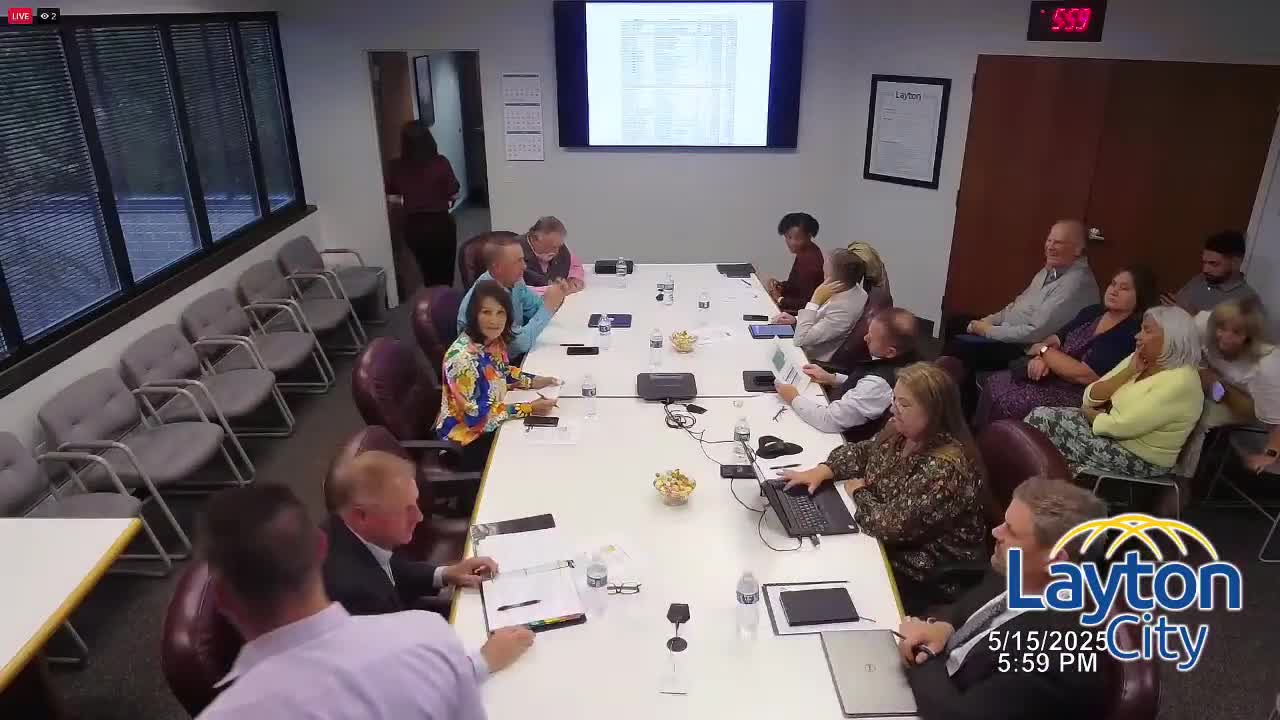
Summary
Layton’s RAMP commission presented its annual funding recommendations to the council, proposing about $1.42 million for major projects, roughly $600,000 for Tier 1 grants and smaller Tier 2 awards, and noting substantial applicant match via volunteer hours.
Cameron Cross, chair of Layton’s RAMP (Recreation, Arts, Museums and Parks) commission, told the council May 15 that the commission’s recommendations reflect more applications and higher community engagement this year.
Cross said the commission grouped requests into tiers: major projects represented about 67–68% of recommended funding (roughly $1,420,000), Tier 1 requests made up about 28.6% (about $600,000) and Tier 2 items totaled roughly $74,700. He said total requests this cycle approached $2.0 million and that the commission slightly increased the recommended fund level to meet community demand.
Why this matters: The RAMP fund is a city-managed grant pool that helps parks, arts and community groups finance projects. Council members asked about partial funding decisions and how matched amounts were documented. Commissioners said a key change has been better application guidance and training that pushed applicants to document match — with volunteer hours being the largest source of reported matching contributions.
Details: Cross described a collaborative review process involving applicant representatives when some requests were trimmed. He said the commission prioritized funding “the important parts of projects” and that applicants often identified components they could scale back. On matching, Cross said many applicants now include documented volunteer hours and receipts; the commission treats those documented matches as real contributions to project feasibility.
What’s next: Council members praised the updated application process, IT support for the application portal, and the commission’s outreach. Commissioners asked council members to provide policy guidance if the council wants small-startup organizations to be eligible despite bylaws that now favor multi-year track records. The commission said it will present any proposed bylaw amendments and suggested a possible Tier 3 for smaller startup grants.
Ending: The council thanked the commission and staff for the packet and the expanded outreach, and suggested continued collaboration before the final budget and fall votes.