Get Full Government Meeting Transcripts, Videos, & Alerts Forever!
Get email alerts on the Transportation Buses topic
No spam. Unsubscribe anytime.
Board approves replacement school buses; debate over air conditioning and long delivery timelines
Summary
The Kent School District Board approved purchase orders to replace eight school buses and discussed whether to include air conditioning; staff said adding AC could cost $6,000–$15,657 per bus and that deliveries likely won’t arrive until early 2026, but the board voted 5–0 to approve the purchase orders.
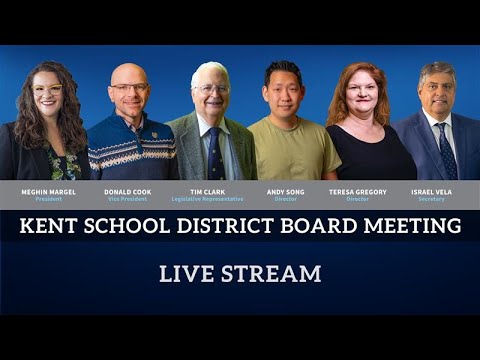
The Kent School District Board approved transportation purchase orders for replacement school buses at its May 14 regular meeting, voting 5–0 after a lengthy discussion about whether to include air conditioning (AC) in the purchase.
What the board approved: The motion to approve item 9.07 (transportation school bus purchase orders) passed unanimously. The five board members present — Director Gregory, Director Song, Director Clark, Vice President Cook, and President Margell — voted in favor.
Key debate: Vice President Cook and other board members pressed transportation staff about including AC in new buses. Transportation staff explained that adding air conditioning is a significant, one-time up‑front cost. During the discussion staff cited a range of estimates: "Air conditioning is a considerable cost," and adding AC historically has been estimated at roughly "6 to $10,000 to add air conditioning to cool an entire bus." Later in the discussion a district figure was cited of an additional $15,657 per bus for special-education-style buses.
Timeline and procurement constraints: Transportation staff and the vendor explained that bus manufacturing and delivery take many months; the district is still awaiting buses ordered 18 months earlier. Staff said the current quote (April 23) is likely to protect the district from near-term tariff effects, but delaying could increase costs. Staff estimated deliveries for these replacement buses in early 2026.
Operational and equity considerations: Board members discussed equity in allocating any air-conditioned buses if the district chose to buy only some. Staff suggested the district could analyze routes and medical needs to prioritize any later AC additions, and noted the transportation vehicle fund has a buffer that could absorb some incremental cost without endangering immediate replacement plans. Staff also noted other lower-cost heat-reduction measures are available, such as painting roofs white; that option can be added to future purchase specifications.
Outcome: The board approved the purchase orders 5–0. Staff said they will prepare options and cost breakouts for future bus purchases (with and without AC) and return to the board, including fleet-replacement forecasting, so the board can evaluate long-term tradeoffs.
Ending: The district will proceed with replacement orders and provide a follow-up analysis for future bus purchases to help the board weigh comfort, equity and long-term cost.