
House subcommittee reviews NASA planetary defense as survey mission, data systems and budgets face scrutiny
Get AI-powered insights, summaries, and transcripts
Subscribe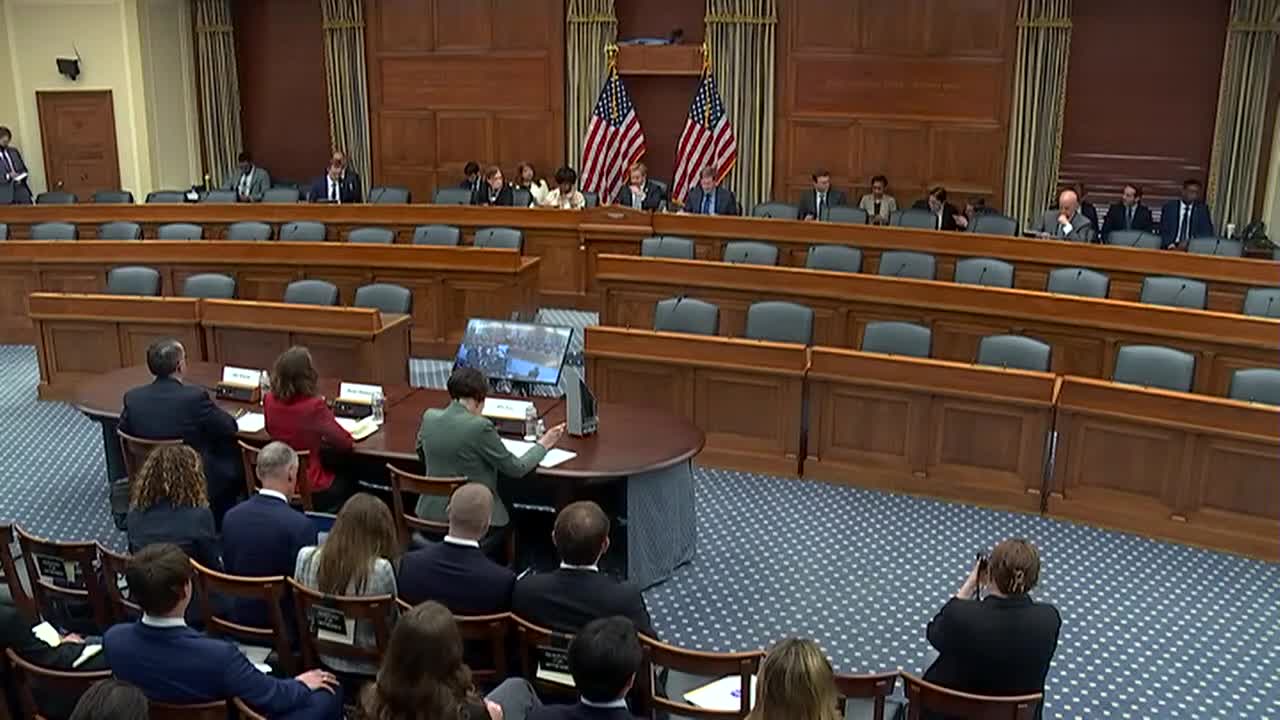
Summary
A House Science subcommittee heard testimony on NASA’s planetary defense efforts — including the NEOSurveyor mission, the Minor Planet Center’s data role and the DART demonstration — while members warned proposed federal budget cuts could imperil detection and response capabilities.
A congressional subcommittee on space and aeronautics heard witnesses on NASA’s planetary defense program on issues ranging from detection shortfalls to mitigation tests, data handling and the potential effects of proposed federal budget cuts.
The hearing opened with Chairman Robert Heridopolos calling the topic “one of the most important” for public safety and noting recent near‑Earth object (NEO) discoveries that briefly registered nonzero impact probabilities. “Protecting our planet from threatening asteroids and comets must be a top priority for NASA,” said Chairman Brian Babin of the full committee during his remarks introducing the topic.
Why it matters: NASA and international partners are responsible for detecting, cataloging and, if necessary, deflecting hazardous objects. Witnesses described progress — notably the 2022 Double Asteroid Redirection Test (DART) demonstration — and persistent gaps in discovery and data processing that depend on sustained funding, ground and space assets, and international coordination.
Dr. Nicola Fox, Associate Administrator for NASA’s Science Mission Directorate, told the panel the agency and its global partners currently “do not know of any sizable object that has a significant risk of impacting Earth in the next hundred years,” while stressing that many smaller but still dangerous objects remain undetected. Fox said NASA is building the NEO Surveyor space telescope to close key detection gaps and confirmed the mission’s launch is planned no later than June 2028, with program teams hoping to accelerate that date.
Professor Amy Mainzer of the University of California, Los Angeles, who leads the NEO Surveyor mission, described how a space‑based infrared telescope will find dark objects that ground optical surveys miss and provide size measurements critical to assessing impact energy. “This is a natural disaster that is 100% preventable if we do our homework, if we take the time and trouble to do it,” Mainzer said, citing DART as proof that a kinetic impact can alter an asteroid’s trajectory given sufficient lead time.
Dr. Matthew Payne, director of the Smithsonian Astrophysical Observatory’s Minor Planet Center (MPC), described the MPC’s role as the international clearinghouse for asteroid observations and risk notification. “Each year, we process more than 50,000,000 observations submitted from over 2 and a half thousand observatories across 80 different countries,” Payne said, and he warned that incoming datasets from facilities such as the Vera Rubin Observatory and NEO Surveyor will increase MPC data volume by an order of magnitude, necessitating upgraded hardware, software and analytic tools.
Lawmakers pressed witnesses on practical capabilities and vulnerabilities. Committee members asked about the timetable and options if an object were found with a nontrivial impact probability years before a projected encounter, how much warning would be needed to mount mitigation, and whether objects approaching from the sun’s direction would remain undetectable by ground telescopes. Fox and Mainzer said space‑based infrared observations and the Surveyor mission in particular will improve detection near the sun and for optically dark bodies, but they cautioned that objects coming directly from the sun’s direction can still evade current surveillance.
The hearing also reviewed infrastructure and coordination gaps. Members asked whether a national deep‑space radar capability study (initiated with the National Science Foundation and Space Force after the 2020 Arecibo collapse) had been completed; Fox said NASA participated in a cross‑agency study and offered to follow up with the committee about sharing results. The OSIRIS‑REx spacecraft extension to study asteroid Apophis after its close 2029 approach was discussed; Fox said the mission will begin taking images roughly two weeks before closest approach and will offer months of follow‑up despite resolution limits.
Budget concerns were a persistent theme. Ranking Member Zoe Lofgren and others cited the administration’s preliminary FY2026 “skinny” budget, which proposed large cuts to federal science agencies, and asked how those cuts would affect planetary defense. Witnesses said they had not yet seen the full FY2026 budget details; Mainzer and Payne described current progress on NEO Surveyor and MPC operations and said earlier funding shortfalls had delayed the mission from initial targets. Payne noted MPC funding through the Smithsonian was currently unaffected.
Panelists highlighted technological priorities: completion and launch of NEO Surveyor (to detect the dark fraction of the population and measure sizes), continued development of mitigation concepts demonstrated by DART, upgrades to MPC data processing (including machine learning), and international partnerships through the International Asteroid Warning Network. Dr. Fox emphasized coordination across U.S. agencies and international partners and described the Planetary Defense Coordination Office as NASA’s primary domestic office for these activities.
The subcommittee received routine housekeeping consent to include a Planetary Society letter in the record and did not take formal votes on policy or funding during the hearing. Members closed by requesting further information, including the deep‑space radar study and budget details.
Looking ahead: witnesses said NEO Surveyor and improvements at the Minor Planet Center are intended to reduce detection gaps and provide the lead time required for mitigation planning, but many of those improvements depend on stable funding and interagency and international cooperation. The committee left the record open for follow‑up and written questions.