
Beer board orders hearing on Uptown Reload permit dispute, asks treasury for timeline
Get AI-powered insights, summaries, and transcripts
Subscribe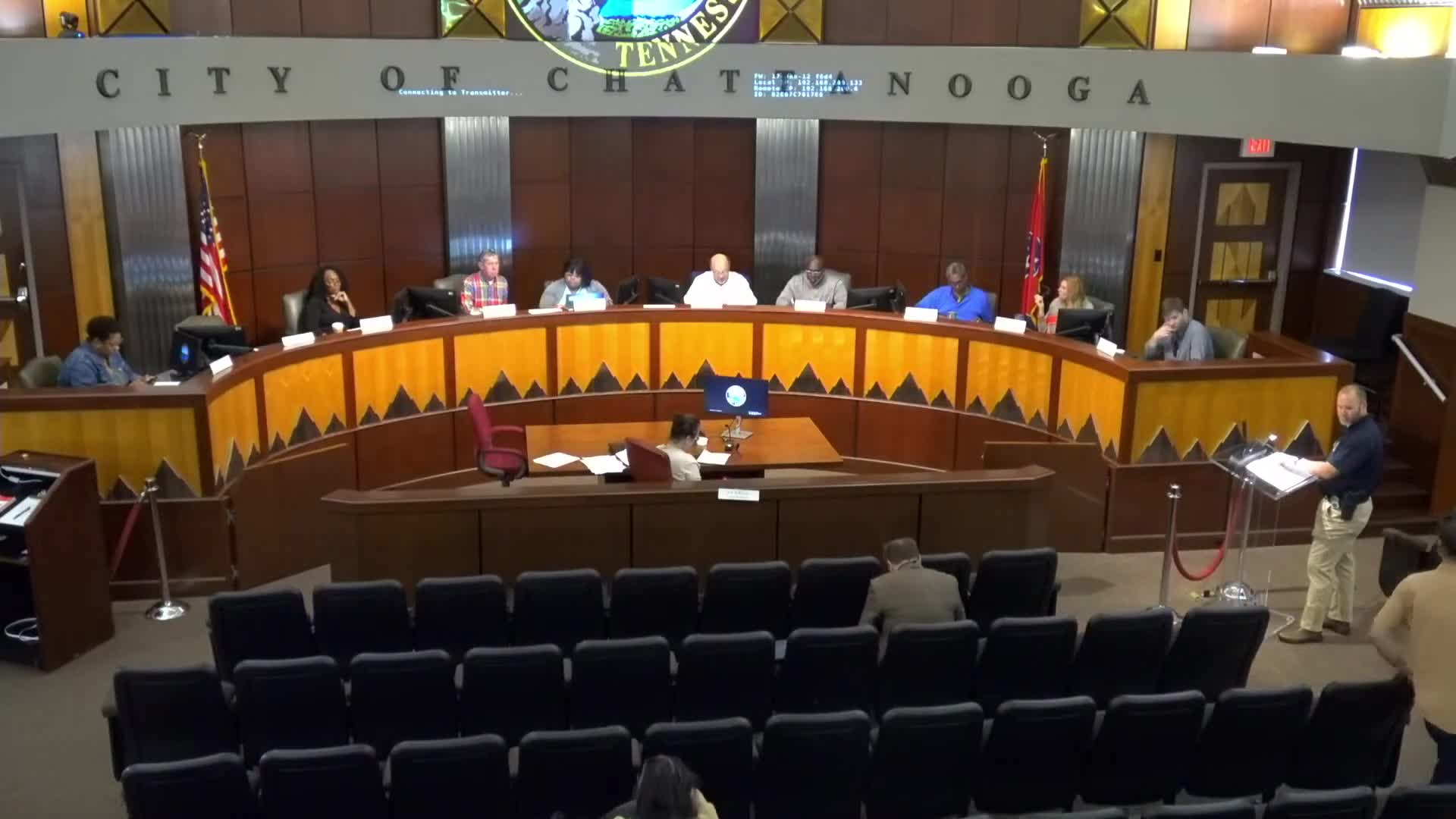
Summary
The Chattanooga Beer Board voted to hear a previously delayed violation involving Uptown Reload (Beer 999) and asked the city treasury to produce a timeline of permit changes after questions about ownership and name changes on the permit.
The Chattanooga Beer Board voted to hear a dispute over a beer permit for a business operating as Uptown Reload (permit number Beer999), after months of uncertainty about who holds the permit and whether the city treasury changed the name on the certificate without board review.
Board members said the issue grew from a sequence of name changes logged in permitting records and a citation tied to the permit; staff told the board some records show the permit name changing to Nathan Benford and later back to Charles Smith. The board asked the treasury office to provide a detailed timeline of the permit ownership changes and asked that the treasury supervisor, Roberta, appear to explain why the name changes were made.
The dispute matters because Chattanooga ordinance requires the clerk, hearing officer and city attorney to set a hearing “within 60 days, but not less than 30 days” after a permittee receives notice. Board members, however, said the code is silent about what happens when a violation is not heard within 60 days. The board’s administrative hearing officer, Trevor, told the panel he has discretion under ordinance 5-200 to manage cases and recommended the panel could consider the matter now despite the delay. As Trevor put it, “The hearing officer is empowered to exercise its reasonable discretion intended to result in the fair, expedient and economical resolution of all cases brought pursuant to this article.”
Board members described a confusing sequence of events: staff first observed a name change on permit records around Dec. 31, and a citation tied to the permit dated Dec. 15 was discussed during subsequent inspections. Staff said the name was changed back to Charles Smith on Feb. 18. Sergeants and inspectors who visited the location reported managers working behind the bar and gave inconsistent accounts about ownership and who is the active permit holder.
Given the record inconsistencies, the board asked regulatory staff to compile an activity timeline from the treasury’s OpenGov activity feed (time/date stamps of changes), to share that timeline with members, and to request the treasury supervisor attend a future meeting to explain the changes. The board debated a motion to dismiss the existing citation and reissue new citations after investigation; that motion was withdrawn. The board then approved a motion, by roll call, to assert authority under the cited ordinance and hear the matter at this meeting. The roll call on that motion recorded votes as follows: Zach — yes; Betsy — yes; Reginald — no; J.W. Cole — yes; Ron — yes; Veronica — yes; Christie — yes; Chair — yes; Brooke — absent.
Board members said they are not prejudging whether the changes were fraudulent, and several members stressed the need for documentary evidence before taking enforcement action. The board directed regulatory staff to investigate the permitting history, coordinate with the city treasury to obtain and certify an activity timeline from OpenGov, and to notify the permit holders of next steps. The administrative hearing process will proceed after the staff investigation and the treasury office’s response.
The board left open the possibility of new citations if investigation uncovers further violations; staff cautioned that asking for an investigation does not guarantee new citations will be issued. The board also asked staff to provide a clear paper timeline or affidavit summarizing changes in the permit record to reduce repeated back-and-forth at future meetings.
Next steps: regulatory staff will request documentation from the treasury office, schedule the hearing officer appearance and circulate the activity timeline to board members before any further adjudicative action on the Uptown Reload matter.