Get Full Government Meeting Transcripts, Videos, & Alerts Forever!
Get email alerts on the Extremism And Militia Movements topic
No spam. Unsubscribe anytime.
Historian in Missoula links local militia figures, far-right literature and Christian identity in public talk
Summary
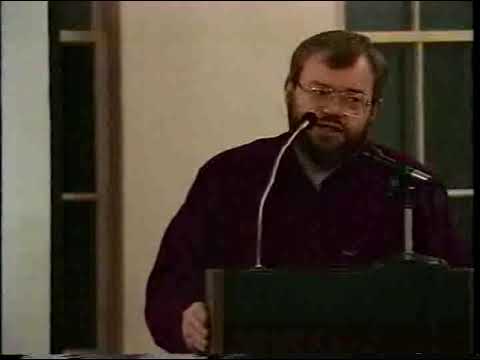
At a public lecture in Missoula, George, a professor of history at Montana Tech, told attendees he has documented connections between local militia activists, talk‑radio programming and a body of far‑right literature that he says echoes European fascism.
At a public lecture in Missoula, George, a professor of history at Montana Tech, told attendees he has documented connections between local militia activists, talk-radio programming and a body of far‑right literature that he says echoes European fascism.
"I was hearing chilling echoes of that long forgotten time, of the late 1920s and early 1930s in Europe," George said, describing statements made on a Butte talk show in early 1993. He told the audience the show’s host, Bob Fletcher, aired for roughly three months in prime drive time and that organizers later collected tapes and catalogs that circulated in Montana and neighboring communities.
The lecture focused on several related strands the speaker said shape contemporary U.S. far‑right movements: distribution of antisemitic and Holocaust‑denying material, radio programs and seminars that drew people from Bozeman, Missoula and Deer Lodge, and a religious strain known as Christian identity or dominion theology. George cited publishers and organizers by name, including George Green, Red Beckman and John Trotman, as local actors who circulated catalogs, tapes and pamphlets. He said a 1993 seminar in Butte that distributed such material drew about 65 attendees.
George described how texts and pamphlets — including reprints of the Protocols of the Elders of Zion and Holocaust‑denial titles — were available through local catalogs and at gun shows. He also referenced academic work he said helped him link those materials to older European sources: Martin A. Lee’s The Beast Reawakens and Deborah Lipstadt’s Denying the Holocaust, both cited to illustrate a historical continuity between pre‑World War II fascist literature and contemporary U.S. extremist publications.
The speaker argued that a specifically American form of far‑right politics frequently blends ultra‑nationalism with a religious element. "You can have it because it can make use of homegrown American values to clothe itself in," he said, describing how Christian identity and dominion theology provide a theological frame for some groups. He pointed to organizations such as the Aryan Nations and other racially defined churches as examples where religion and political extremism overlap.
During a question-and-answer period, audience members and the speaker discussed economic drivers and the political appeal of populist messages. George cited a secondary analysis of a Federal Reserve survey — which he said interviewed more than 5,000 households — and summarized its finding as "1% of the American population owns 40% of the assets," a statistic he used to argue that economic dislocation can make populist or radical explanations attractive to some citizens. He also emphasized the role of deindustrialization, farm crises and the perception that governments and corporations are unresponsive to ordinary people.
George described actions his group took in the 1990s: he and others recorded Fletcher’s broadcasts, compiled tapes and turned them over to the Montana Human Rights Network, and formed a Butte Human Rights Coalition to oppose the programming. He said Fletcher lost sponsorship in Butte but continued to circulate materials and videos.
The speaker warned against accepting racial conspiracy theories as explanations for economic or political change and urged those on the left to develop economic programs addressing the grievances that can drive people toward extremist groups. "If you don't want them believing that, you need to go out and make — we need to go out and make just a strong argument for what we think the conspiracy is," he said.
No formal governmental action or vote resulted from the lecture; the event was a public talk followed by audience questions. The Montana Human Rights Network was identified in the talk as a recipient of collected recordings and materials; the speaker said local organizing followed those deliveries.
The presentation combined historical references, first‑hand research into local radio and print distribution, and audience dialogue about economic and social roots of radicalization. The speaker encouraged further research and local organizing and opened the floor for additional questions at the end of the session.