Get Full Government Meeting Transcripts, Videos, & Alerts Forever!
Get email alerts on the Budget Forecast topic
No spam. Unsubscribe anytime.
Ross Local board approves May five-year forecast showing surplus this year, projected deficits later
Summary
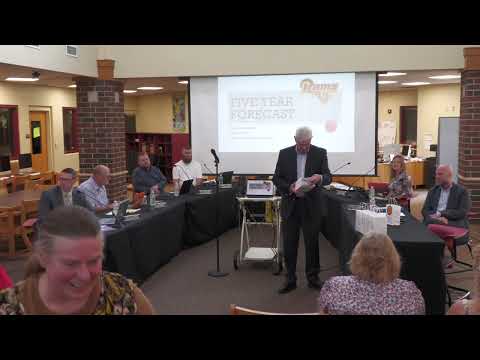
Treasurer Steve Cassader presented the Ross Local Board of Education with a May update to the district's five-year financial forecast and the board voted to approve the forecast for submission to the Ohio Department of Education.
Treasurer Steve Cassader presented the Ross Local Board of Education with a May update to the district's five-year financial forecast and the board voted to approve the forecast for submission to the Ohio Department of Education.
The forecast projects about $34 million in revenue and roughly $31.3 million in expenditures for fiscal 2025, leaving an estimated ending cash balance of about $8.8 million and roughly 103 days cash on hand. Cassader told the board the forecast shows revenue growth of about 2.5% annually against an assumed 5% annual increase in expenditures, producing small deficits beginning in fiscal 2026 and widening later in the five-year window.
Cassader said the forecast covers only the general fund, uses three years of historical data plus the current year and four forecast years, and is a management tool based on present assumptions. He identified the main revenue drivers: property tax collections boosted by a 2023 triennial update in Butler County, a 1.25% earned income tax that has grown about 7.3% in fiscal 2025, and roughly $10 million annually in state funding that the district treats as flat-funded for projection purposes. He also noted a one-time delinquent public utility tax payment related to a pipeline appeal that temporarily raised that line to about $2.3 million this year.
On the expenditure side, Cassader said personnel costs are the largest category and that the forecast includes no new positions. The forecast assumes 6% base salary growth in fiscal 2026, then 2.5% in subsequent years, step increases of about 2.1% annually, and an estimated $250,000 in attrition savings for FY26 tied to recent retirements. He also noted negotiated fixed utility rates have produced substantial savings compared with current market rates.
Board members pressed for clarity about the growth gap between revenue and expenditures. "You're saying that revenue is projected to go up approximately 2.5%, and expenditures are gonna go up at double that rate of 5 some percent each year," Mister Young said; Cassader confirmed that was the forecast assumption. Board members discussed the difficulty of asking voters for a levy after recent large property-tax increases at the county and state level and raised the prospect that the district will need to consider different approaches to maintain fiscal stability.
Cassader emphasized uncertainty beyond the next one to two years, including the state biennium budget, the next triennial real-estate reappraisal in 2026 (the forecast assumes an 8% increase in class 1 and 2 property values for that reappraisal), and possible legislative changes such as proposals affecting the 20-mill floor. He recommended focusing on the current and next fiscal years because assumptions beyond that are more speculative.
Following the presentation, the board approved the treasurer's items (including the forecast) during the consent portion of the meeting; the roll-call vote recorded Yes responses from Mister Gunther, Mister Beckman, Mister Kleinfelder, Missus Webb and Mister Young.
Cassader said the district will file the approved forecast with the Ohio Department of Education as required and will provide more detail on potential energy projects this summer if the district pursues a second phase of the state energy loan program.