Get Full Government Meeting Transcripts, Videos, & Alerts Forever!
Get email alerts on the Charter Schools School Choice topic
No spam. Unsubscribe anytime.
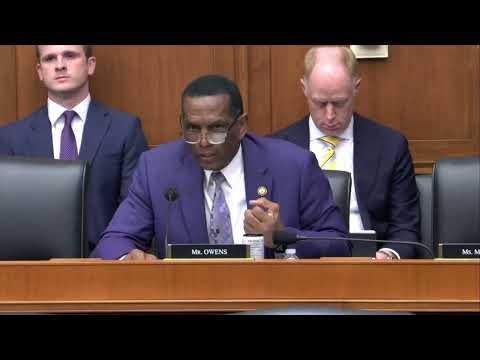
Congressman Burgess Owens and panelists debate charter schools and school choice
Summary
Congressman Burgess Owens and a panel of education speakers discussed charter schools, competition in public education and demand for seats at Success Academy, citing research and application figures but taking no formal action.
Congressman Burgess Owens, speaking during a panel discussion on education policy, praised Utah’s schools and urged greater school choice while asking panelists about evidence that competition improves traditional public schools.
The discussion focused on whether charter schools lift student outcomes in traditional public schools and on demand for seats at charter networks. Owens said Utah’s students “consistently outperform national averages” and praised Success Academy and America Preparatory Academy as examples. He asked panelists to summarize the research on competition’s effect on public schools.
“Mister Griffin” cited a body of student-level studies and summarized their conclusions: by his count, 13 studies find positive effects, seven find neutral or mixed effects and four find negative effects, a distribution he said suggests that “traditional public schools tend to improve” when faced with competition. A different panelist argued that “charter schools are public schools” and that they offer options for students “who have been left behind” by traditional systems, citing Wallace Stegner Academy in Utah as an example where more-disadvantaged students reportedly outperform the state average.
Miss Moscosowitz said Success Academy received 28,000 applicants last year for about 3,000 openings, and added, “We don’t have a demand problem. We have a supply problem.” Owens also thanked several panelists by name, including Mister Griffin, Mister Mikasiewicz and Mister Cobb, for their work on the issue.
Panelists raised examples and cited studies during the discussion but did not propose or pass any formal actions. The meeting record contains statements about reading proficiency — one speaker said “70 percent of eighth graders reading below proficiency” — but the transcript does not specify the population or dataset to which that figure refers.
No votes or formal directives were recorded during this segment; the item remained a discussion among the congressman and panelists.