Get Full Government Meeting Transcripts, Videos, & Alerts Forever!
Get email alerts on the Education Choice topic
No spam. Unsubscribe anytime.
Speaker urges support for Education Choice Children’s Act, says it would unlock billions for scholarships
Summary
A commenter at the meeting praised the Education Choice Children’s Act (ECCA), saying it would create tax-credit-funded scholarships to let families choose K-12 options; the remarks were advocacy, not a formal action by any governing body.
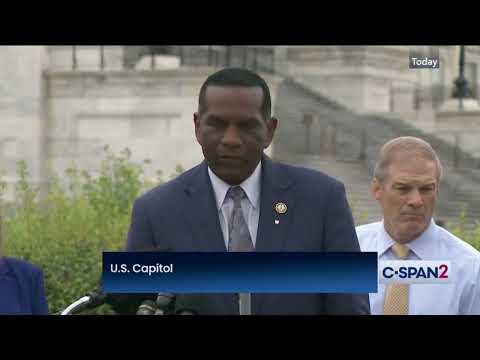
A commenter at the meeting, identified in the transcript only as "Commenter," urged support for the Education Choice Children’s Act, saying the proposal would direct private tax-credit donations to local scholarships.
"When funding follows a student, the student wins and family legacies are built," the Commenter said, adding that "The Education Choice of Children's Act is the most consequential educational bill in our lifetime and is exactly what American families need."
The speaker said the ECCA would "unlock billions of dollars in annual tax credits for donations for local scholarships and organizations" and framed the measure as privately funded rather than a federal program: "The ECC is not another government program, but instead follows a private volunteer giving. It allows Americans to invest in America's greatest national resource, our children."
The Commenter described the scholarships as enabling families to choose the education that "best fits their child, whether it be public, private, homeschool, charter, trade, or [career and technical education]," and said the program would "support low and middle class incomes, covering up to 90% of K‑12 students."
The remarks were advocacy during the meeting; no motion, vote or formal action on the ECCA was recorded in the transcript. The speaker characterized the bill as not creating new federal bureaucracy or mandates and said it would not cut funding for public school districts, calling the funding "new dollars, probably generated, locally used."
The Commenter framed the measure as promoting competition and innovation in education and said proponents view it as a way to prioritize outcomes over bureaucracy: "The ECCA allows for competition, innovation, merit, and a failing system that's for too long has put bureaucracy over, outcomes."
No official conclusions, votes, or directives implementing or endorsing the legislation were recorded in the provided transcript. The remarks represent advocacy for federal legislation rather than a local governing body's action.