
Peachtree City UDO committee outlines plan to consolidate development rules, aims for 2026 draft
Get AI-powered insights, summaries, and transcripts
Subscribe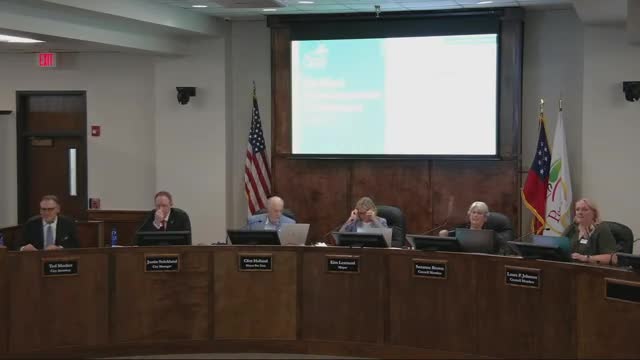
Summary
The Unified Development Ordinance steering committee told Peachtree City Council it is working to combine the city’s zoning, land‑use, site‑development and building regulations into one consolidated UDO and aims to produce an initial draft by September 2025 and a finalized document by December 2026.
The Unified Development Ordinance steering committee told Peachtree City Council it is working to combine the city’s zoning, land‑use, site‑development and building regulations into one consolidated UDO and aims to produce an initial draft by September 2025 and a finalized document by December 2026. Kenneth Hamner, chair of the UDO committee, presented the committee’s mission and timeline at the council meeting and described an outreach plan that includes subject‑matter experts, public education sessions and regular check‑ins with council.
The committee’s nut graf: Hamner said the UDO will “consolidate zoning, land use, site development, and building regulations to a single and accessible document to enhance clarity, improve efficiencies, and support sustainable growth for our residents, developers, and city officials.” He said the group set a goal to develop and implement the UDO “by the end of 2026” and has broken the work into three phases: a foundation phase (underway), an initial draft phase (targeted for late summer 2025) and a finalization phase through December 2026.
Committee members and city staff described the size and scope of the task and urged use of outside consultants and technology. “Our UDO is almost about 600 pages separated into the different sections that it's compiled into,” a committee member said, adding that staff capacity and legal review will be required. Hamner and other members said the committee has produced a 104‑page initial outline, launched a public website for transparency and is already cataloging existing ordinances, overlaps and conflicts in spreadsheets.
Councilmembers questioned the amount of public engagement planned and whether two public sessions would be sufficient for a document of this size. Hamner replied that the public meeting dates were listed as TBD and that the committee is “very flexible” and would schedule additional sessions if requested. He also said staff had already contacted Fayetteville to learn from their recent UDO process.
On process and resources, council members and staff noted prior funding set aside for a UDO effort in the CIP contingency that could be used for a consultant. Justin (staff) confirmed the original CIP allocation can be extracted from contingency to fund consulting work. Hamner and a committee member said the committee will rely on consultants for legal, planning and drafting work and will serve as reviewers.
The committee emphasized that the work is iterative and subject to annual check‑ins with council; tentative dates for updates include November 2025, February 2026, June 2026 and October 2026. Hamner said the timeline is ambitious and can be adjusted, but that the committee preferred an aggressive schedule to make measurable progress.
The presentation closed with a request for continuing council engagement and the committee’s willingness to expand public outreach if needed.