
Ways & Means committee reports S12 favorable; expands who may petition to seal criminal records, leaves DUI‑1 fee unchanged
Get AI-powered insights, summaries, and transcripts
Subscribe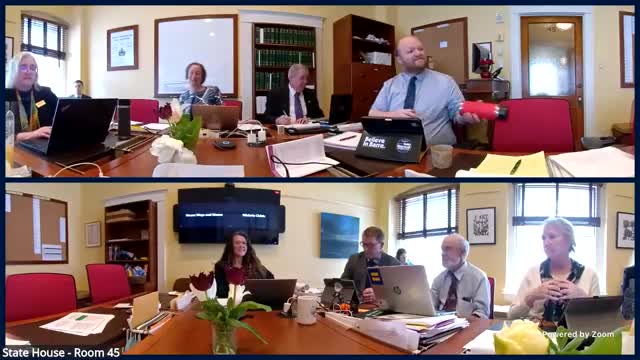
Summary
The Ways & Means Committee voted 8‑0‑3 to report S12 — an act that expands which misdemeanor and some felony offenses are eligible for petitioning to seal criminal history records — while preserving the existing $90 fee for petitions to seal a first‑offense DUI (DUI‑1).
The Ways & Means Committee voted to report S12, an act relating to sealing criminal history records, finding the bill "favorable as received" after staff and fiscal briefing about how the measure would affect court workload and a narrow judicial special fund.
The bill expands the list of offenses for which a person may petition a court to seal (close) their criminal history, retains expungement in limited areas such as diversion, and preserves the existing $90 statutory fee charged only for petitions to seal a first‑offense DUI (DUI‑1), committee members were told.
"Sealing means that it's just that it's kind of closed up. People don't have access to it unless the general assembly has specifically allowed certain access for specific purposes. Expungement means that the record is gone. Literally is destroyed and doesn't exist any longer," said Michelle Tyle, Office of Legislative Counsel, in an overview of the bill and the distinction between sealing and expungement.
Tyle told the committee that Vermont's current system allows people to petition to seal or expunge records and that S12 moves the law toward a "one‑track" system emphasizing sealing while keeping narrow expungement categories. The bill increases the number of offenses that qualify for petitioning and maintains the existing waiting periods and notice procedures: when a petition to seal is filed the state (the attorney general or the state's attorney who prosecuted the case) receives notice and may object; parties may also stipulate to sealing, which would avoid a hearing.
Chris, a fiscal analyst, said the legislation does not change the fee structure and described the funding effect as minimal. "This is a really, really obscure corner of the judicial fee world. Nothing's changing," he said, noting that the criminal history record sealing special fund brought in about $5,200 in fiscal 2024 and that the $90 fee for DUI‑1 petitions is unchanged.
Committee members asked clarifying questions about why DUI‑1 is treated differently; staff said that the historical policy choice predates current counsel work and that they would follow up with the staff member (Brynn) who previously handled sealing policy for background. Other questions focused on how many petitions might be filed under the expanded eligibility; staff and judicial testimony have not provided a predictable volume, and the courts did not request additional resources at the briefing.
Representative Maslow moved that the committee find S12 "favorable as received." The committee called the roll and the clerk recorded the motion as approved by a vote of 8 yes, 0 no, 3 absent. The committee did not record a second for the motion in the transcript.
The bill had been voted out of House Judiciary the prior Wednesday and was discussed only briefly in Ways & Means because the only statutory fiscal element in the draft — the existing DUI‑1 petition fee — is unchanged. Staff advised committee members that, if state entities later determine additional resources are needed to implement an expanded sealing workload, they would return with that information.
Committee staff said they would distribute follow‑up materials by email. The committee recessed to a Caucus of the Whole afterward.