Get Full Government Meeting Transcripts, Videos, & Alerts Forever!
Get email alerts on the Immigration Enforcement topic
No spam. Unsubscribe anytime.
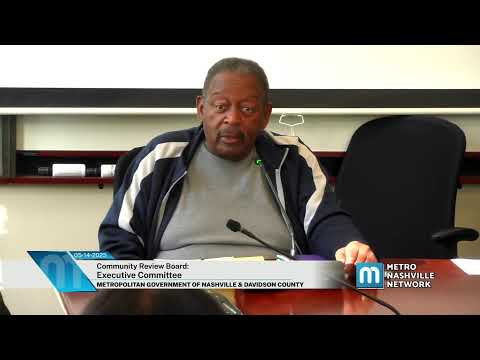
Board monitors immigration complaints, considers updating 2020 policy recommendations for police interaction with immigrants
Summary
Board staff said they received 30–40 calls about immigration issues and referenced a recent council public‑safety meeting; the board reiterated that Metro Nashville Police Department is not an immigration‑enforcement agency and discussed revisiting four 2020 recommendations on police interactions with immigrant communities.
At the May 24 meeting board staff reported receiving 30–40 calls related to immigration issues and said they are monitoring complaints and public concern after a recent council public‑safety meeting that included Legal Director Wally Dietz, Captain Gilder (council liaison) and Steven Martini of the Department of Emergency Communications.
Staff emphasized the board’s operational limit: the Community Review Board can investigate complaints about individual officer conduct but has no authority over federal immigration policy or immigration enforcement. When a complaint alleges inappropriate conduct by a Metro officer in the context of immigration enforcement, the board will vet evidence and forward the case to OPA as usual.
The board also discussed a 2020 set of immigration policy recommendations it drafted after community complaints at that time. Staff summarized the four recommendations and said it is prepared to revisit and update the document:
1) Require MMPD policies and training on which U.S.‑ or foreign‑issued identifications will be accepted for issuance of misdemeanor citations to reduce custodial arrests where citation would suffice.
2) Create policies discouraging officers from asking about immigration or citizenship status; require documentation and justification in report narratives when an officer does ask.
3) Train officers on the difference between administrative and judicial warrants and on what federal immigration authorities can and cannot do while conducting enforcement in public spaces versus areas with a reasonable expectation of privacy.
4) Have the Department of Emergency Communications and MMPD document and track instances when federal immigration officials request MMPD or first‑responder assistance during immigration enforcement actions.
Staff said the 2020 recommendations are posted online and that work is underway to produce an updated draft for board review. The board did not adopt new policy language at the May 24 meeting but agreed to retain the issue for future discussion given current community concerns.