Get Full Government Meeting Transcripts, Videos, & Alerts Forever!
Get email alerts on the Affordable Housing And Local Economic Development topic
No spam. Unsubscribe anytime.
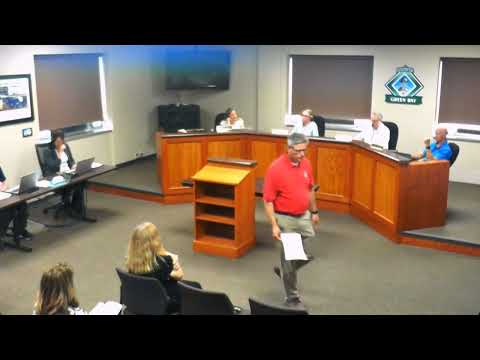
Green Bay finance committee authorizes $500,000 for new community shelter, approves $309,000 match for JBS urban farm barn
Summary
On May 13, 2025, the Green Bay Finance Committee unanimously authorized a $500,000 allocation to the New Community Shelter capital campaign and approved a roughly $309,000 match for the JBS urban farm barn project, subject to application and compliance.
On May 13, 2025, the Green Bay Finance Committee unanimously authorized a $500,000 allocation to the New Community Shelter capital campaign to expand transitional housing capacity and approved a $309,000 allocation to match a federal grant for the JBS urban farm barn project. The approvals were made conditionally “subject to receipt of application and compliance,” committee members said.
The measures grew out of a joint request from Alders Johnson, Proffitt and Morgan to use remaining ARPA funds set aside for site acquisition and affordable housing. Alder Johnson said he had proposed pairing the shelter request with the Willow-led JBS project because “I didn’t feel comfortable with with all of that funding going towards a barn because that wasn’t necessarily the intent of what we’re trying to do there.”
Committee and staff discussion focused on which local revenue source could legally and most cleanly finance the requests. City staff reported guidance from the U.S. Department of Housing and Urban Development (HUD) that ARPA affordable-housing dollars are being treated like HOME/HUD funds and therefore carry restrictions that could make using the ARPA housing allocation problematic for the shelter’s operational model. "That being said, we have TADA funding available that we could fund this project with," a city director told the committee, referring to the tax-increment district affordable-housing (TADA) cash balance.
Willow representatives told the committee that the organization had received a federal grant of roughly $316,000 and would need a roughly $309,000 match to unlock the award. A Willow speaker explained the city money would be used to build the urban barn and related storage and food-production capacity, but would not by itself fund public restrooms: "What it would not be enough money for is public restrooms," the representative said, adding that porta-potties would remain in place unless additional funding is secured.
Terry Webster, speaking about the shelter project, described the planned 41 apartment units as part of a broader $14 million campaign that has raised “a little over 12” million dollars to date and said the shelter would not break ground until the nonprofit had the fundraising in place. "Everyone deserves the dignity of a home," Webster said.
Tara, speaking on behalf of WELO and the Willow initiative, framed the barn and processing hub as part of an economic-development strategy for east Green Bay: "We’re asking the city to commit this matching fund, not just for the facility, but for what it really represents. Ownership, dignity, shared prosperity in our communities," she said.
The committee’s motion — moved by Alder Johnson — authorized the two allocations and was approved unanimously. City staff said they will draft the necessary application and agreement language and will confirm which specific financing source (ARPA site-acquisition bucket, TADA funds or other) is appropriate given federal restrictions and the terms of earlier city allocations and MOUs.
Next steps: staff will (1) confirm the legal constraints on the ARPA allocation tied to the RDA vacant-parcels designation, (2) prepare grant/agreement language for the shelter and JBS project to document eligible uses and reporting requirements, and (3) work with Willow and the shelter on final matching documentation and a timeline for any disbursements.