Get Full Government Meeting Transcripts, Videos, & Alerts Forever!
Get email alerts on the Land Use Housing topic
No spam. Unsubscribe anytime.
Palos Park panels keep 2,200-square-foot minimum on 1-acre lots, drop minimum for smaller lots
Summary
At a joint meeting, the Planning Commission and Zoning Board agreed to keep the existing 2,200-square-foot minimum on lots of one acre or larger and to remove a villagewide minimum for lots under one acre; the group also adopted a "legacy lot" approach to recognize many smaller existing lots.
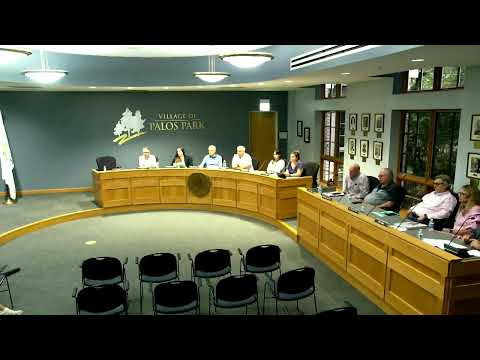
Palos Park — Members of the Palos Park Planning Commission and Zoning Board of Appeals agreed at a joint meeting to keep a 2,200-square-foot minimum dwelling size for lots of one acre or larger while removing a villagewide minimum for lots under one acre.
The change recognizes a large number of existing smaller lots in the village and creates a distinct category — chosen at the meeting as “legacy lots” — to give those existing parcels standards tailored to their size so owners can rebuild without routine variances. Staff said the draft will carry forward a 20,000-square-foot threshold as the floor used to classify lots as legacy versus full R-1 (one-acre) lots.
Why it matters: Commissioners and residents said the decision should make it easier for long-time homeowners, older residents and heirs to repair or replace homes on smaller, lawfully created parcels without the additional expense and uncertainty that often accompanies nonconforming-lot findings. Opponents at the meeting said minimum sizes help preserve the village’s character and discourage overbuilding on large lots.
Most important facts: The boards first took an informal vote on eliminating any minimum and the motion failed narrowly (6–5). After further discussion members split the question into two parts: keep the 2,200-square-foot minimum for lots of one acre or larger, and have no minimum for lots under one acre. The chair counted paddle responses and the meeting record shows the group endorsed the two-part outcome.
What was discussed: Staff explained that the 2,200 number is the existing standard in the code and that 1,500 square feet had been suggested in an earlier draft as a possible minimum for smaller lots or some lot-size tiers. Commissioners and members of the public debated benefits and downsides — including flexibility for downsizing homeowners, environmental concerns about encouraging larger houses, the adequacy of building-code minimums, and how banks and title companies treat nonconforming lots.
Direction to staff: The boards asked staff to draft the legacy-lot language and to prepare a public‑hearing draft showing the change (clean and redline versions). Staff also agreed to return in a future meeting with sample elevations and examples showing how a 1,500- and 2,200-square-foot house sit on various lot sizes.
Panel context and next steps: The legacy-lot approach is intended to memorialize existing development patterns without creating a process to produce new smaller lots. Staff said they will bring a revised draft for public hearing that incorporates the legacy-lot rules and clarifies how annexed lots, previously issued demolition permits and contiguous lots are handled.
Ending note: Commissioners said they expect additional follow-up on related items — setbacks, impervious-surface limits and mapping rules — before the draft moves to a formal plan‑commission public hearing and then to the village council for adoption.