Get Full Government Meeting Transcripts, Videos, & Alerts Forever!
Get email alerts on the Regulatory Sandbox topic
No spam. Unsubscribe anytime.
Committee weighs open-banking rollout, general regulatory sandboxes and whether Wyoming should widen its sandbox law
Summary
The committee reviewed the state’s open-banking rule status and debated whether to update Wyoming’s fintech sandbox or adopt a broader regulatory sandbox; officials said CFPB open-banking rules face legal challenge and that Wyoming’s sandbox has seen limited use.
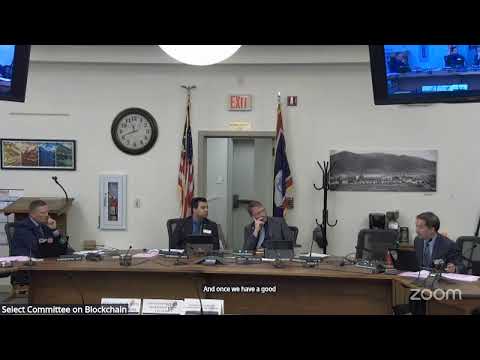
The Select Committee on Blockchain, Financial Technology and Digital Innovation Technology received updates on open banking and Wyoming’s financial-technology sandbox and discussed whether to broaden the state’s sandbox law to cover additional sectors such as insurance or housing.
Open banking: State Banking Commissioner Jeremiah Bishop said Wyoming’s open-banking rules are in place but that no Wyoming banks currently report using them. On the federal side, Bishop said the Consumer Financial Protection Bureau’s (CFPB) open-banking rule (Regulation E amendments published October 2024) is subject to litigation and may face congressional or regulatory change; the committee therefore plans to monitor federal developments before changing state rules.
Financial-technology sandbox and general regulatory sandboxes: Committee counsel and stakeholders reviewed the 2019-era Wyoming fintech sandbox and an earlier 2024 draft of a broader “general regulatory sandbox” that would give temporary relief from multiple statutes for authorized projects. Private counsel and industry speakers said Wyoming’s sandbox has seen few users; commonly cited obstacles are residency requirements (applicants must be domiciled in Wyoming to use the program), the state’s small population and because many potential applicants find the existing law does not actually block their projects but only imposes licensure costs.
Secretary of State Karl Allred told the committee his office has not received financial-technology sandbox applications for securities matters and noted residency rules are a significant obstacle for out-of-state innovators. Insurance Commissioner Jeff Roode surveyed other states with insurance sandboxes and reported few if any approved, implemented projects; where sandboxes exist, applicants often seek exemptions from licensing or capital requirements rather than novel regulatory relief for an innovative business model.
Committee members were split about a broad, general-purpose sandbox. Some members urged fixing and promoting the current fintech sandbox before extending it into many policy areas. Others said targeted sandboxes (for housing, insurance or specific use cases) might be more practical. Representative Tim Filer said he previously drafted a general regulatory-sandbox bill but withheld it because it would require legislative attention; committee members asked staff to research other states’ experience and return with examples and possible drafting options.
Next steps: The committee authorized outreach and research to gather actual use cases and success stories from other states and asked staff and stakeholders to evaluate whether reciprocity or modified residency rules could be viable and what statutory changes would be necessary to make Wyoming’s sandbox more attractive to innovators.
What didn’t happen: No statutory changes were adopted. The committee did not vote to expand the sandbox or adopt a general regulatory-sandbox bill; it asked for further research and stakeholder engagement.