Get Full Government Meeting Transcripts, Videos, & Alerts Forever!
Get email alerts on the Solid Waste Recycling topic
No spam. Unsubscribe anytime.
Jupiter High student pitches Tequesta commercial recycling program; EAC offers outreach help
Summary
Thomas Gehring, a Jupiter High student who runs the school recycling program, asked the Village of Tequesta Environmental Advisory Committee for support to introduce commercial recycling in local shopping centers and businesses, citing collection fees, low demand and lack of awareness as the main barriers.
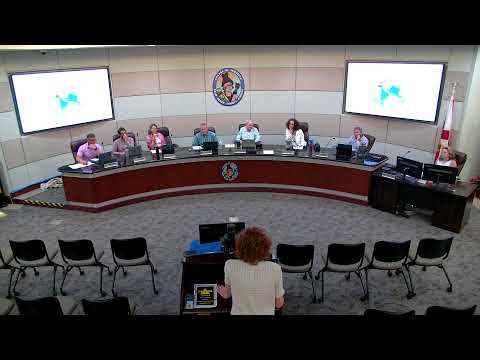
Thomas Gehring, a junior and the lead of Jupiter High School’s recycling efforts, presented a student‑led proposal to introduce commercial recycling to Village of Tequesta businesses at the Environmental Advisory Committee meeting on May 14, 2025. “My name is Thomas Gehring. I, I run the recycling at Jupiter High School,” he said.
Gehring described three principal barriers to commercial recycling locally: recycling pickup fees charged to businesses, limited customer demand or perceived demand, and lack of awareness about recycling options. He proposed a two‑track approach: negotiate with the local hauler (Waste Management) to understand pickup rates and collection logistics, and run a community outreach campaign to educate businesses and customers. Gehring said his Green Team club at Jupiter High has more than 100 members and volunteered support for outreach and education.
Committee members and staff discussed operational options. Gehring said he envisions separate commercial recycling receptacles or dumpsters (or single‑stream service where available), rather than business staff sorting trash manually. Village staff and committee members advised Gehring to prioritize high‑volume businesses (for example, retail that receives frequent cardboard deliveries) and to gather business owners’ perspectives on physical space, access and cost. The village offered graphic‑design support for outreach materials and assistance in contacting Waste Management; the village manager agreed to re‑contact the Waste Management representative to facilitate a meeting.
Several committee members emphasized incentives and recognition as potential motivators for property owners to host recycling receptacles and to share costs across tenants. Committee members also suggested capturing pilot data from a small number of plazas or high‑volume merchants to demonstrate cost offsets and participation before wider rollout.
Gehring circulated an initial outreach flyer prepared by a student designer and was encouraged to use the EAC as a sounding board as he develops business outreach and a rate proposal for the hauler. The committee asked Gehring to keep members updated through the EAC email channel so staff and volunteers can support meetings with Waste Management or property owners.