Get Full Government Meeting Transcripts, Videos, & Alerts Forever!
Get email alerts on the Poetry Writing Process topic
No spam. Unsubscribe anytime.
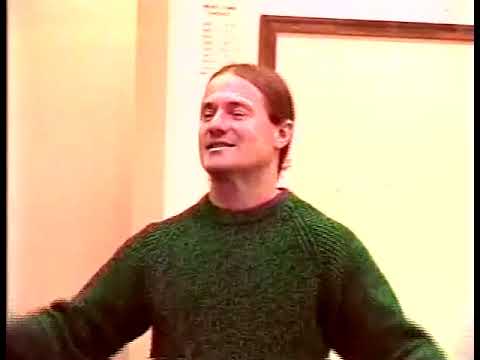
Poet in Missoula says poems often 'come' during writing, reads new work
Summary
At a Missoula reading, a poet and creative-writing teacher described classroom exercises he uses to provoke surprise in writing and read poems — including "Electrolux," "Meat Grinder," and "Sweet Citrus" — as examples of meaning found through the act of writing.
A presenter and creative-writing teacher told an audience at a Missoula reading that poems frequently emerge in the act of writing rather than being fully planned in advance, and he read several of his poems to illustrate that process.
The presenter opened by saying, "What I wanna do is I wanna debunk a myth a little bit," and described a classroom exercise in which students imagine a blank landscape, walk to a shoreline and "reach down and grab something." He instructed students to examine the imagined object closely and then "throw it away," using the second object they find as the prompt for a poem. "Then I tell them, throw it away," the presenter said, explaining that the deliberate loss of the first, attractive prompt forces writers into surprise and discovery.
Why it matters: the reading offered a practical demonstration of a common teaching strategy in creative writing — creating constraints and moments of uncertainty so language supplies unexpected meanings. The presenter read multiple poems created by similar exercises, arguing that language and image, not authorial forethought, often produce the poem's final insight.
The session mixed short talks about craft with live readings. In "Electrolux," the presenter moved from an object (an old vacuum cleaner) to memory, writing and double meanings. He read lines including, "I remember reading that name, the letters bannered across the canister," and later recounted how a student pointed out a pun: "I see that pun in the last stanza," referring to the use of the word "shocked." The presenter attributed some discoveries to readers and students: "It's not me who's doing the thinking here. It's the poem that's doing the thinking. I learned from the poem."
Other pieces the presenter read grew from similarly unexpected prompts. He described pulling a meat grinder from the imagined waves and read "Meat Grinder," a childhood scene that, he said, gained additional meaning years later when he understood family context. He also read "Sweet Citrus," recounting a memory of grapefruits in Tucson that yielded a surprise image — "Maybe this is how a stray dog thinks" — the line he said he did not intend but discovered through the writing.
The presenter framed the method repeatedly: begin with the first images that arrive, let them lead to story, and allow the story to produce a previously unrecognized meaning. He cited a short Chinese poem line — "The poet is a hollow bamboo" — to emphasize that writers must be open and receptive. He also described an exercise in which students exchange objects and write about what someone else brought, forcing them to work from someone else's detail rather than their own chosen prompt.
Audience interaction was limited but substantive. A student in the room pointed out the pun in "Electrolux," which the presenter said helped him see what the poem had done. Near the reading's close, the presenter and audience members exchanged brief practical questions about copies of the work and the reading concluded with informal conversation.
The reading included references and settings that locate the material in Montana and the presenter’s life: Flathead Lake and communities around Kalispell and Big Fork, Glacier Park (Mount Reynolds), Yellow Bay, and earlier memories from Wisconsin and Tucson. The presenter described classroom work at a community college and multiple instances in which classroom feedback altered his understanding of a poem.
The event served as a demonstration of a teaching philosophy: poems often reveal themselves through language and surprise, and close reading by students can uncover layers the author did not foresee.