Get Full Government Meeting Transcripts, Videos, & Alerts Forever!
Get email alerts on the Economic Development topic
No spam. Unsubscribe anytime.
Resident urges Munhall to adopt LERTA tax-abatement ordinance to attract housing and development
Summary
A Munhall resident urged council to ask the solicitor to draft a Local Economic Revitalization Tax Assistance (LERTA) ordinance that would offer multi-year property tax abatements to encourage rebuilding and new construction, and asked the borough to align any ordinance with the Steel Valley School District and neighboring municipalities.
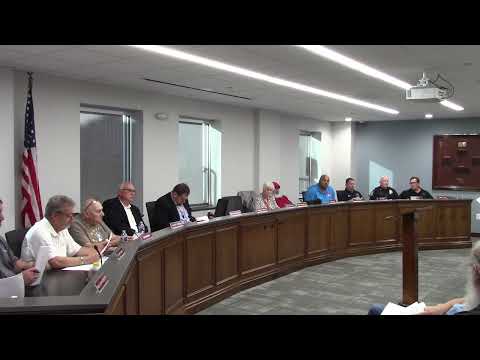
Brad, a resident who said he registered to present, asked the Munhall Borough Council on a night meeting to consider adopting a LERTA (Local Economic Revitalization Tax Assistance) ordinance to attract developers and incentivize rehabilitation of deteriorated properties.
Brad said the program would allow taxing bodies — typically the school district, municipality and county — to offer a time-limited tax abatement on improvements in defined deteriorated areas and urged the council to keep any local ordinance “generous” and “simple” to appeal to investors.
The nut graf: Brad told council that Steel Valley School District was working on its own LERDA draft and that the district’s participation would increase the program’s impact because schools represent the largest share of property tax. He recommended aligning Munhall’s ordinance with Steel Valley’s so applications could be packaged across taxing bodies.
Brad outlined three central elements commonly included in LERTA-style ordinances: the abatement length (currently up to 10 years under Pennsylvania law), the percent abated (up to 100 percent was cited as the municipal maximum) and the geographic definition of eligible “deteriorated areas.” He said some states allow 20-year terms and that a bill in the Pennsylvania General Assembly was seeking to extend the allowable term to 20 years.
Brad offered local examples and precedents, including Erie and Homestead borough ordinances, and noted a waterfront apartment project shifting from a TIF to an ALERT-based package with the school district and county as partners. He also suggested land‑bank properties could qualify after cleanup and stabilization.
Council members present responded that they wanted to move the idea forward: one member said the solicitor could draft a proposed ordinance for the next workshop and staff indicated they would consult the tax office and other stakeholders. No formal motion or vote to adopt an ordinance was recorded during the meeting.
Ending: Brad left contact information for follow-up and council members asked staff to draft a proposal so the borough could review language, timeline and how the local abatement would interact with the school district and county share of tax revenues.