Get Full Government Meeting Transcripts, Videos, & Alerts Forever!
Get email alerts on the Public Safety Gun Violence topic
No spam. Unsubscribe anytime.
Seattle leaders outline streetlight, policing and parks measures after spike in West Seattle shootings
Summary
City and department leaders at a District 1 town hall described short- and longer-term steps — streetlight upgrades, targeted police patrols, park-hour changes and community grants — to address a rise in gun violence in North Delridge, Snake Hill and High Point.
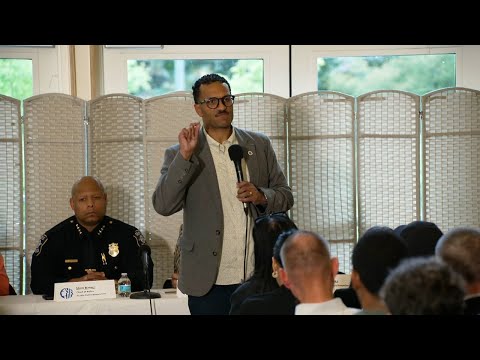
Councilmember Rob Sacca, the Seattle City Council member representing District 1, opened a May community town hall by saying the meeting was called because of “a troubling rise in gun violence in 3 specific neighborhoods” — North Delridge, Snake Hill and High Point — and he and city leaders outlined a package of operational responses.
At the meeting, city agencies described three near-term areas of work: Seattle City Light-led streetlight upgrades in targeted blocks, Seattle Police Department (SPD) hot-spot analysis and increased directed patrols, and a Parks Department summer safety plan that will reduce hours at some problem sites and add enforcement coordination. The mayor’s chief public safety officer framed the effort as an all-departments priority.
SPD Chief Sean Barnes said the department has already changed tactics in the Southwest Precinct, increasing and focusing patrols. “We call them directed patrols,” Barnes said, describing a goal of concentrated officers in specified blocks and an effort to measure patrol effects. He also described expanded gun-violence meetings and voluntary overtime for “gun violence reduction units.” Barnes urged neighbors to call 911 if they see suspicious activity and described plans for the real-time crime center and camera-registration program to support investigations.
Dawn Lindell, chief executive officer of Seattle City Light, described a district-targeted lighting effort on Southwest Brandon Street and fielded a timeline. “The work order will be issued by May 30; beginning June 2 through June 6 we are gonna trim trees … and by June 13 we will have the extended bracket arms in which will broaden the light coverage and we will have those luminaires replaced,” Lindell said. She also gave system figures for context: “City Light maintains about 90,000 street lights” and reported recent District 1 outage work and current outages.
Parks leadership said the department will add Greg Davis and Cottage Grove parks to a summer safety plan and use operational authorities to limit hours at specific problem sites. The parks representative said, “One of the things that we're gonna be doing is adjusting our hours. That's something that I can do under my authority as the park superintendent,” and described steps including gates and closer coordination with SPD and park rangers.
Chief Public Safety Officer Natalie Walton Anderson urged residents to report incidents and use 911: “Please call 911. If you are unclear if it's an emergency, please call 911. You can text 911,” she said, noting the city is hiring to increase 911 capacity. Councilmember Sacca reiterated the same simple instruction in his closing remarks: “Call 911. If you see something, say something.”
City departments and the Department of Neighborhoods described community-facing supports. Department of Neighborhoods Director Chow outlined grants and neighborhood coordinators and listed local partners supported through the Neighborhood Matching Fund and Food Equity Fund. The department’s community engagement coordinator for the area, Rosa Garcia, was named as a local contact for follow-up work.
Speakers also highlighted complicating factors. Sacca and others said copper theft of wiring has driven some recurrent outages and described state law limits that may constrain local action on metal resale. Sacca said the state legislature recently acted on metal sales and that the resulting “express preemption in state law” limits local municipalities’ options. Officials repeatedly framed the problems as rooted in years of underinvestment; Sacca cited a citywide “27% missing sidewalk gap” and described $8 million and a 10-block sidewalk commitment targeted to the three neighborhoods.
Several officials urged residents to share evidence and video through SPD channels rather than social media. Catherine Barrow of the precinct said officers and community-service staff can provide an upload link into the department’s evidence system (referred to in the meeting as evidence.com) and that case numbers help detectives follow up.
Leaders closed by promising continued follow-up: City Light provided a work schedule for the Brandon Street block, SPD described near-term patrol and analytic steps and Parks described operational changes that will be implemented ahead of summer. Councilmember Sacca also said he would provide clearer public information on a separate $2 million Delridge road-change item that residents asked about but that he acknowledged had been the subject of online misinformation.
For now, agency leaders asked residents to keep reporting incidents, to register cameras with SPD when possible and to expect more detailed outreach and resources from council and executive offices as departments implement the announced steps.