Kempsey Gardner economist: Utah and Salt Lake City showing strong growth but national uncertainty looms
Loading...
Summary
Natalie Goughner of the Kem C. Gardner Policy Institute told the Salt Lake City Council the state and the city are among the nation's fastest-growing economies, but trade policies and falling tourism pose risks to local revenues.
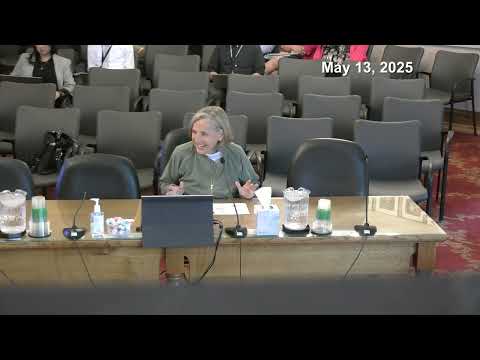
Natalie Goughner, director of the Kem C. Gardner Policy Institute, told the Salt Lake City Council on May 13 that Utah led the nation in 2024 gross domestic product growth and Salt Lake City is registering faster population and job growth than the state average.
Goughner said Utah's 2024 GDP growth measured about 4.5 percent versus a U.S. average near 2.8 percent. "We have the fastest growing economy in the nation," she said. She reported the Institute's provisional estimate that Salt Lake City's population is just over 220,000, a roughly 4 percent increase from 2023, and that the city accounts for about 25 percent of jobs in Utah.
The Kemp C. Gardner Policy Institute director told the council those strengths coexist with growing uncertainty. She cited higher effective tariff rates on goods trade and a sharp drop in some tourism forecasts as sources of risk, and pointed to recent declines in consumer sentiment measures. "There's a consumer that's feeling a little funky," she said, noting that leisure and hospitality employment had declined about 2 percent year-over-year and some tourism forecasters have cut expected activity for 2025.
Why it matters: Salt Lake City receives large shares of state employment and a substantial portion of city general fund revenue is sales tax dependent. Economic strength supports municipal revenues and development; sustained national headwinds or falling visitor spending could reduce sales taxes and room taxes that fund some services.
Goughner told the council the local job market remains strong and unemployment is lower in Utah than nationally. She also warned that economists assign roughly a 45 to 60 percent probability to a recession in coming months and that policy uncertainty and tariffs could temper investment and international travel. She recommended continued attention to workforce and education as long-term priorities and said the city's downtown investments help maintain an urban center that supports statewide dynamism.
Council members questioned the relationship between city revenue streams and these national risks. Councilman Derek Petrol pointed out that 42 percent of the city's general fund comes from sales tax and asked whether sales-tax reliance makes budget planning more tenuous. Goughner agreed sales tax is cyclical and noted income and capital-gains tax at the state level can be volatile.
Nut graf: The presentation delivered to the council framed Salt Lake City's current position as comparatively strong—high population and job growth and above-average household incomes after cost-of-living adjustments—while warning that tariffs, falling international travel and lower consumer confidence could create near-term revenue pressure for city budgets.
Context and next steps: Goughner and council members discussed practical responses such as protecting core services and investing in workforce development and education to sustain upward mobility. She said the Gardner Institute is collaborating with national researchers on upward-mobility studies focused on parts of the Salt Lake Valley; council members asked staff to keep working with the institute on local data that can inform budget decisions.
Ending: The council received the briefing as background while balancing FY26 budget choices; the mayor's recommended budget and department-level presentations that followed began translating some of those fiscal implications into specific line items and operating assumptions.