Get Full Government Meeting Transcripts, Videos, & Alerts Forever!
Get email alerts on the Fire Station Replacement topic
No spam. Unsubscribe anytime.
Westmont unveils three options to replace Station 183 after decades of leaks, cramped bays and rising calls
Summary
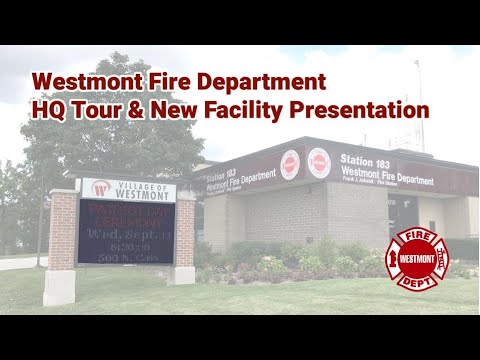
Deputy Chief Tom Frank of the Westmont Fire Department led a public tour and presentation at the Frank J. Johanek Firehouse (Station 183) where village officials and consultants outlined three options to repair or replace the 1991-built facility.
Deputy Chief Tom Frank of the Westmont Fire Department led a public tour and presentation at the Frank J. Johanek Firehouse (Station 183) where village officials and consultants outlined three options to repair or replace the 1991-built facility.
Frank said the station has persistent roof leaks, narrow apparatus bays that were sized for older, smaller vehicles, no dedicated meeting space, and inadequate decontamination and living-quarters separation. “The building’s kinda lived beyond its expectations here, and it’s time to do something about it,” Frank said during the tour.
Why it matters: Westmont fire officials said call volume has risen sharply since 1991, when the station opened — from about 1,253 calls in 1991 to 5,516 calls last year — and that the village’s concentration of nursing and medical facilities raises demand for emergency medical responses. Fire Chief Steve Riley said the department is “an ISO Class 1” and accredited but that maintaining that level of service “is getting harder and harder when we’re doing it out of the building that we’re doing.”
Three design options and trade-offs
- Temporary rehab (estimated $10–11 million): remodels the existing building’s interior to add decontamination zones and modest living-quarters improvements while keeping the current bays and apron. Consultants described it as least disruptive to operations but warned it is likely a short- to mid-term fix: it would not enlarge bays, solve ADA access fully or guarantee long-term elimination of leaks.
- Rehab plus addition (estimated $23–25 million): retains and expands the current building, adds larger bays and improved living and admin space and could be done in phases. Consultants said this reduces some constraints but still works around the existing structure, which could leave lingering inefficiencies and continuing risk from the original building envelope.
- New facility (estimated $25–28 million): a ground-up, two-story building with a basement and five apparatus bays, decontamination zones, separate washer/dryer for contaminated gear, improved bunks adjacent to bays, and community/training spaces. Presenters said a new build reduces contingency risk, avoids ongoing leak repairs and maximizes operational efficiencies, but is the most expensive option.
Costs, funding and schedule
Mayor Nero told the audience the village has applied for at least one state grant, has a letter of support from Representative Kasdan and is planning a local sales tax to finance the project if the board approves it. “If we do decide to pursue this, we could start realizing those funds July 1,” Mayor Nero said, adding that the plan as presented would not increase property taxes.
Village staff said a municipal bond over 20 years was the likely financing vehicle; consultants estimated construction alone on a new facility at roughly 16–20 months and the full planning and approvals process at about 32–46 months. Officials said contingency amounts are larger for projects that remain inside the existing structure because unknowns commonly arise during renovation.
Operational issues raised by staff
Deputy Chief Frank and other presenters described operational and safety shortcomings at Station 183: bay doors sized to 1991 vehicles, equipment and personnel crowded together during responses, lack of decontamination showers and separate gear storage, a single washer/dryer handling both contaminated towels and bedding, roof leaks that require tarps over bunker gear, an ADA noncompliant ramp and the absence of a meeting/training room large enough for ongoing crew training and community use. Frank noted the department now has 83 sworn members and daily staffing patterns that can put nine crew members in tight quarters.
Public questions and next steps
Residents asked about coverage during construction, whether the village had considered adding a separate third station instead, and how long a new build would take. Fire officials described temporary relocation plans if a full teardown is selected (ambulance operations staged at Public Works, use of trailers or village buildings to house vehicles and crews during construction) and said planning will seek to maintain current coverage levels. The village will continue applying for grants and seek community feedback before the board votes.
No formal board vote or contract award occurred at the event; the session closed with a routine motion to adjourn. Deputy Chief Frank told attendees, “There has not been a decision made yet,” and village leaders encouraged public comment at an upcoming Fire/Public Safety Committee meeting and via email.
Ending: The village’s Fire/Public Safety Committee will meet to continue the discussion; officials said the full board expects to consider next steps in the coming months after review of public input, grant outcomes and financing options. No construction contracts or final financing decisions were made at the presentation.