Get Full Government Meeting Transcripts, Videos, & Alerts Forever!
Get email alerts on the Community Crisis Response topic
No spam. Unsubscribe anytime.
Thriving Mind and mobile response team outline 988, peer supports and in‑person crisis response for Miami‑Dade
Summary
Thriving Mind South Florida and the county Mobile Response Team described countywide crisis resources including 988, a 24/7 mobile response team, a living‑room diversion model and an expanded peer workforce to help people in crisis avoid hospitalization.
Thriving Mind South Florida and the county’s Mobile Response Team described how local crisis services, 988 and embedded peers are being used to connect people to treatment and reduce hospitalizations.
"We are the safety net agency for mental health and substance use treatment," Maria Gohart said, identifying herself as vice president of behavioral health at Thriving Mind South Florida, the managing entity that receives Department of Children and Families funding and contracts with community providers.
Gohart said Thriving Mind funds crisis stabilization units, mobile response teams and community providers that serve uninsured and underinsured residents. She described services ranging from prevention programs in schools and "mommy‑and‑me" residential tracks to the "living room" diversion model, which she said provides up to 23 hours of de‑escalation and connection to supports as an alternative to inpatient crisis admission. Gohart also said Thriving Mind funds peers and recovery community organizations; she said the county now has about 84 peer specialists embedded across programs.
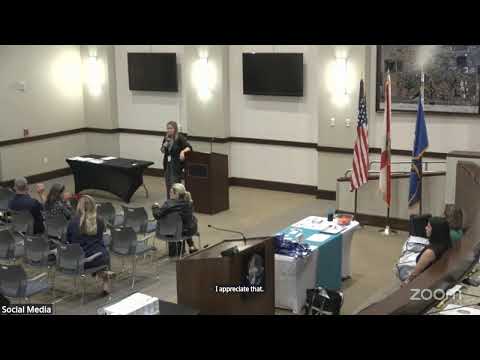
Luciana Beltran, program director of the Mobile Response Team (MRT), told the task force, "We operate 24 7. Right? And we cover Miami Dade County, the entire county." She described MRT as a team of licensed clinicians, behavioral‑health technicians and peers who respond to in‑person assessments across the county, including in schools, parks and residences. Beltran said MRT aims for a 60‑minute on‑scene response time and reported a recent county average of about 51 minutes.
Beltran said MRT handled roughly 310 calls per month and that the program’s Baker Act rate for assessed cases was about 25%; she explained that peers on the team provide follow‑up contacts at 24, 48 and 72 hours and sometimes keep cases open for up to a month to help link people to outpatient services. She also described transportation arrangements: most pediatric Baker Act transports are handled by a non‑law‑enforcement ambulance service (MCT Express) and, when risk is identified, MRT will coordinate with law enforcement.
Meeting presenters recommended that community members become familiar with 988 and local MRT contact procedures and promoted Thriving Mind’s website and warm line for referrals. Luciana provided a local phone number for an in‑person response during the meeting and urged residents to call MRT when a clinician is needed on site rather than relying solely on 988 phone support. No action or vote followed the presentations.