Get Full Government Meeting Transcripts, Videos, & Alerts Forever!
Get email alerts on the Pedestrian Safety Reporting topic
No spam. Unsubscribe anytime.
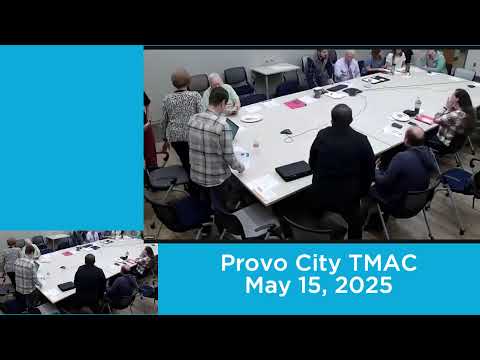
BYU students tell TMAC near‑miss map shows gaps in Provo crash reporting for pedestrians, bikes and scooters
Summary
BYU students presented a student‑reported map of near misses and crashes around the University corridor and urged TMAC to address a gap in the city police crash reporting form that excludes many micromobility vehicles; a professor recounted an e‑scooter crash that was initially unrecordable online.
BYU students and a faculty member told the Transportation Mobility Advisory Committee that Provo’s collision data undercounts pedestrian, bicycle and micromobility incidents because the city’s online crash reporting form does not accept non‑motor‑vehicle entries.
Emma McKenna, a BYU student presenting a mapped inventory of near misses and collisions, said students reported multiple hot spots on 800 North and in the southern University corridor where people walking and biking experience near misses and crashes. The student mapping asked respondents to mark near misses, collisions and witnessed incidents; the group focused on the high‑frequency locations immediately south of campus.
Professor Alicia Redell, a BYU public‑health professor and West Provo resident, described her September 11, 2023 e‑scooter crash: "The form wouldn't let me submit the crash because my vehicle, as a scooter, wasn't recognized. Only car make and model are accepted." Redell said she waited three hours at the police station to have an officer take her statement so the crash would be recorded.
Nut graf: Students told TMAC that near‑miss reporting — incidents that fall short of reportable injury or police response — is a valuable data source for preventing future serious crashes. TMAC members and staff agreed that better counting would improve prioritization for safety investments such as bulb‑outs, rectangular rapid flashing beacons (RRFBs), lighting and refuge islands.
Students also reported confusion among campus users about how to report non‑motor‑vehicle crashes and near misses; many respondents said they did not know to call 911 or how to use the local nonemergency reporting process. TMAC members said underreporting hinders project prioritization because funding and design attention are often driven by crash counts in official data sets.
Planned and proposed follow‑ups discussed on the record included Summer 2025 construction on portions of Fifth East and 800 North (state or city projects already in planning), installation of RRFBs and bulb‑outs at targeted intersections, added street lighting at poorly lit crossings, and a possible TMAC‑supported near‑miss reporting pilot. TMAC staff said they would raise the issue with Provo Police Department staff at their next weekly meeting to request that the online reporting form accept micromobility entries or that police public information staff provide clear alternative reporting steps.
Quotes and context: TMAC staff stressed the operational constraint that capital funding is allocated from a prioritized queue; staff said they often require crash data to move projects into funded lanes. As one staff member said on the record, "If you don't report it, it never happened." Students and committee members asked whether TMAC could support an education campaign for drivers and pedestrians and help design a near‑miss reporting mechanism.
Ending: TMAC members thanked the students and encouraged broad reporting of crashes and near misses while staff pursued a technical fix or interim guidance with police so micromobility incidents are captured in Provo’s safety data.