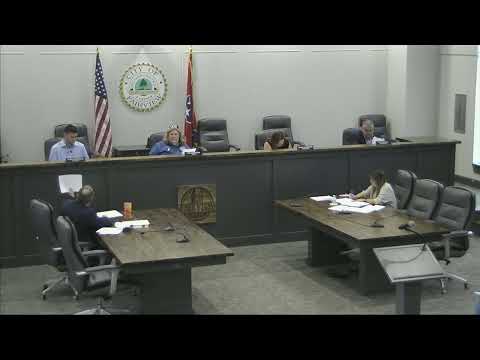
City manager frames budget as "revenue driven," urges a "maintain year" approach
Loading...
Summary
City Manager Tom Daugherty told the Fairview Board of Commissioners the fiscal plan will be conservative after years of strong growth, citing a leveling of sales-tax receipts, a 60-day lag on local option sales taxes, strong building-permit revenues, and a recent state excise tax change.
At a Fairview Board of Commissioners budget workshop, City Manager Tom Daugherty told the board the city will treat the coming fiscal year as a "maintain year," basing the budget on current receipts rather than anticipated spikes. "Our budget is revenue driven," Daugherty said, adding the city will "spike again, but we're not gonna base a budget on what we think."
Daugherty walked commissioners through the city’s three largest general-fund revenue streams: local sales tax, state-shared sales tax and property tax. He said local option sales taxes are received on a roughly 60-day lag — December holiday sales typically show up in March receipts — and that sales-tax growth that was strong from fiscal years 2020–2023 has leveled in 2024–25. Building-permit revenue is at record highs and the budget anticipates $848,000 in residential building-permit revenue; Daugherty said residential permit fees are split 42% to the general fund operating account, 42% to a facilities account and 16% to the parks account.
Daugherty also flagged an unanticipated state change that reduced some excise-tax revenue: "Governor Lee signed it in May of last year," he said, and the city adjusted its forecasts accordingly. He told the board departments returned "wish lists" that initially put the budget about $1.2 million in the red; department heads and the manager reduced asks to arrive at a balanced proposal and he opened the floor for questions.
Why it matters: the revenue assumptions set the baseline for staffing, equipment and capital decisions the board will consider before a second reading and budget adoption. Daugherty said the city aims to adopt a budget before June 30 and hopes to have answers to outstanding questions before the second reading. "There's opportunity to get answers, questions answered in between first and second read," he said.
Next steps: commissioners scheduled a follow-up workshop to continue department-by-department review and the pay-plan discussion; Daugherty said the budget will still require formal board approval and any procurement or contracts would follow that approval.