Get Full Government Meeting Transcripts, Videos, & Alerts Forever!
Get email alerts on the School Lunches topic
No spam. Unsubscribe anytime.
Pembroke Park commissioners pledge to seek local funding after Broward schools end universal free lunches
Summary
Commissioners discussed options, estimated local cost for two elementary schools and asked staff to pursue partnerships and a possible special meeting to act before the fall term.
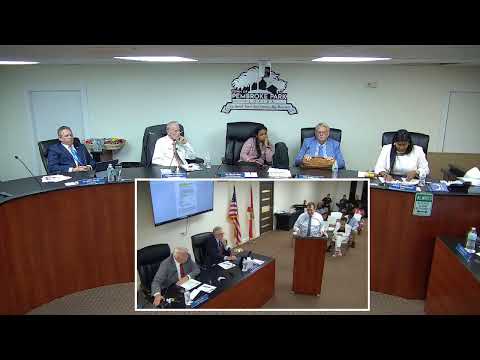
Commissioners in the Town of Pembroke Park said on May 14 they will pursue local and partnership options to replace meals lost after the Broward County School Board ended universal free lunches and raised meal prices.
The change matters because Pembroke Park leaders said some students rely on school meals as their primary daily nutrition; the commission heard local estimates for the cost to subsidize lunches for the town’s two elementary schools and directed staff to begin planning immediate next steps.
Commissioner Jeffrey Jacobs told the commission the Broward School Board rescinded universal free lunches and increased the price by $1. He said the immediate local estimate to fully cover meals at Watkins Elementary and Lake Forest Elementary ranges from about $260,010 (at the previous rate) to roughly $770,000 to cover both schools under the district’s new rules. “If the school board’s not gonna take care of our children, someone’s got to,” Jacobs said.
Jacobs asked the town manager and staff to explore a public–private approach with the food provider Appetites (named in the discussion) and to talk to nearby West Park about sharing costs. Town Manager (name not specified in the public record) told commissioners he could convene a special meeting during the summer break if necessary to approve any funding because the new school year begins in August. “I may ask you to convene a special meeting so that I can have direct commission action taken during your hiatus,” the manager said.
Commissioners discussed grant and donation options the town could pursue and noted past examples where local businesses or nonprofits donated to school cafeteria funds. Commissioner Jacobs said he had already contacted the two elementary principals and planned to keep working on the issue over the summer.
No formal subsidy resolution or expenditure was adopted at the May 14 meeting; commissioners instructed staff to develop options for the commission, including potential private donations, nonprofit grants (examples discussed: American Beverage Foundation/grant opportunities), and a joint approach with neighboring municipalities. The town manager indicated he had discretionary authority to approve limited emergency funding and asked proponents to coordinate immediately so staff could prepare any paperwork for quick action.
Commissioners said they wanted legal and procurement checks before committing significant municipal funds and asked staff to return to the commission with draft agreements, cost estimates, and timelines at a special meeting or the next regular meeting if possible.
The discussion closed with an agreement among several commissioners to pursue multiple funding routes and to return to the commission with concrete proposals in time to affect the fall term.
A next step identified by the town manager was to coordinate with school principals, the town attorney and the finance department to assemble precise cost estimates and a recommended mechanism for delivering assistance to students without delaying start-of-school services.