Get Full Government Meeting Transcripts, Videos, & Alerts Forever!
Get email alerts on the Ev Infrastructure topic
No spam. Unsubscribe anytime.
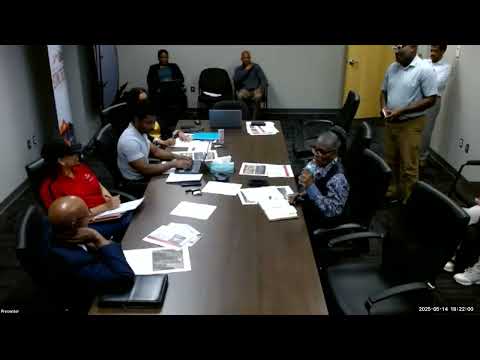
Stonecrest committee prefers vendor-hosted EV chargers; asks staff to refine proposal with Georgia Power program
Summary
City staff presented two options for public EV chargers to the Stonecrest Transportation Committee on May 14 — a $240,000 city-owned model and a vendor-hosted, no-upfront-cost model — and the committee signaled a preference for the vendor-hosted option while asking staff to return with vendor comparisons and negotiated terms.
City staff presented two options for public electric-vehicle (EV) charging stations to the Stonecrest Transportation Committee on May 14, and committee members indicated a preference for a vendor-hosted, no-upfront-cost model while asking staff to return with more detail and shorter contract terms.
"Option 1 is the city owned model. That that is a $240,000 investment ... The city owns and operates the charging station," Mr. Hawkins, the finance staff member on the presentation team, told the committee. "Option 2 is a direct partnership ... There will be no upfront capital investment required. Vendor installs, owns, and maintains the chargers. City incurs no ongoing operational and maintenance costs."
Why it matters: staff said EV ownership is growing in Georgia and that regional planning forecasts a marked increase in EVs over the next decade. Committee members discussed budget exposure, maintenance staffing and market dynamics and emphasized that Stonecrest currently lacks staff capacity to run a city-owned charging program.
Staff presented estimated financials for the city-owned option: an approximately $240,000 capital outlay, roughly $96,000 in annual revenue under the presentation’s utilization assumptions, about $32,000 in estimated annual operating costs and a payback period of about 3.7 years based on the model’s assumptions (2 hours of use per charger per day, 365 days). The presentation flagged that those figures are model-based and sensitive to utilization and pricing.
Staff also described the Georgia Power Make Ready program and noted a regional grant from the Atlanta Regional Commission (ARC). The presentation said ARC received a 2024 grant for about $6,100,000 to install EV stations in surrounding counties and that Georgia Power is investing to support community fast charging. Staff named national providers including ChargePoint, EVgo and Electrify America and described EnviroSpark as one vendor partner.
Several council members, including Mayor Jasmine Cobble and Vice Chair Alicia Washington, said they favored the hosted/vendor option on the grounds that it avoids taxpayer capital exposure and administrative burden. The mayor said administrative details belong to staff to implement and that if funding is required a legislative appropriation would follow.
The committee gave staff direction to pursue option 2 as the working approach, to negotiate contract term length (several members expressed concern about a 10-year vendor term), to compare vendor commitments (ChargePoint vs. EnviroSpark) and to confirm that the hosted approach can run under the Georgia Power Make Ready program. Staff said the hosted model would allow the city to test demand before investing capital.
Staff also noted private development activity: presenters told the committee that a Japanese restaurant at 7105 Stonecrest Parkway has proposed installing six EV chargers as a private project, a separate example of local private-sector deployment.
No formal ordinance or appropriation was voted at the meeting. Committee members asked staff to return to the committee with refined analysis, vendor comparisons, contract-term options (seeking a shorter term than the 10 years discussed) and any budget implications if a city-owned option is ultimately chosen.