Get Full Government Meeting Transcripts, Videos, & Alerts Forever!
High court hears dispute over whether promotion-of-prostitution indictment must specify which conduct
Summary
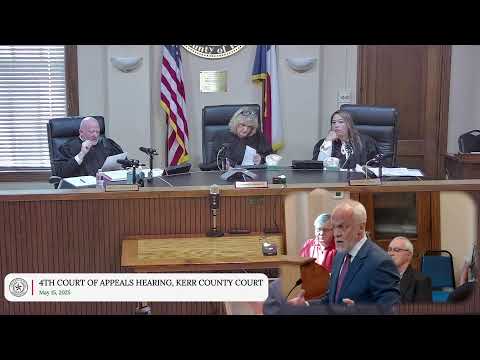
The Texas Court of Criminal Appeals heard arguments in C.R. Williams v. State over whether an indictment charging "aggravated promotion of prostitution" must identify which of six statutory verbs the state relied on — a question the defense says implicates jury unanimity, notice and discovery rules.
The Texas Court of Criminal Appeals, sitting in Kerrville, heard oral argument in C.R. Williams v. State of Texas on whether an indictment for aggravated promotion of prostitution must specify which of six statutory verbs the State relied on — an issue the defense says is necessary to ensure jury unanimity and adequate notice.
Mark Bennett, attorney for the appellant C.R. Williams, told the court that while the prior appellate reversal reached the correct result it did so “for the wrong reason,” and argued the trial court erred by denying a motion to quash the charging instrument. Bennett said the statute lists six verbs (for example: own, invest, finance, control, supervise, manage) and that allowing all six without clearer specification denied the defendant the notice required to prepare a defense. “Article 39.14 of the Code of Criminal Procedure ... was not complied with in this case,” Bennett said, arguing the record does not show discovery that would have cured the alleged notice defect.
Bennett asked the court to reverse and dismiss the…
Already have an account? Log in
Subscribe to keep reading
Unlock the rest of this article — and every article on Citizen Portal.
- Unlimited articles
- AI-powered breakdowns of topics, speakers, decisions, and budgets
- Instant alerts when your location has a new meeting
- Follow topics and more locations
- 1,000 AI Insights / month, plus AI Chat